15 Pool Games for Toddlers: Safe Water Play Ideas
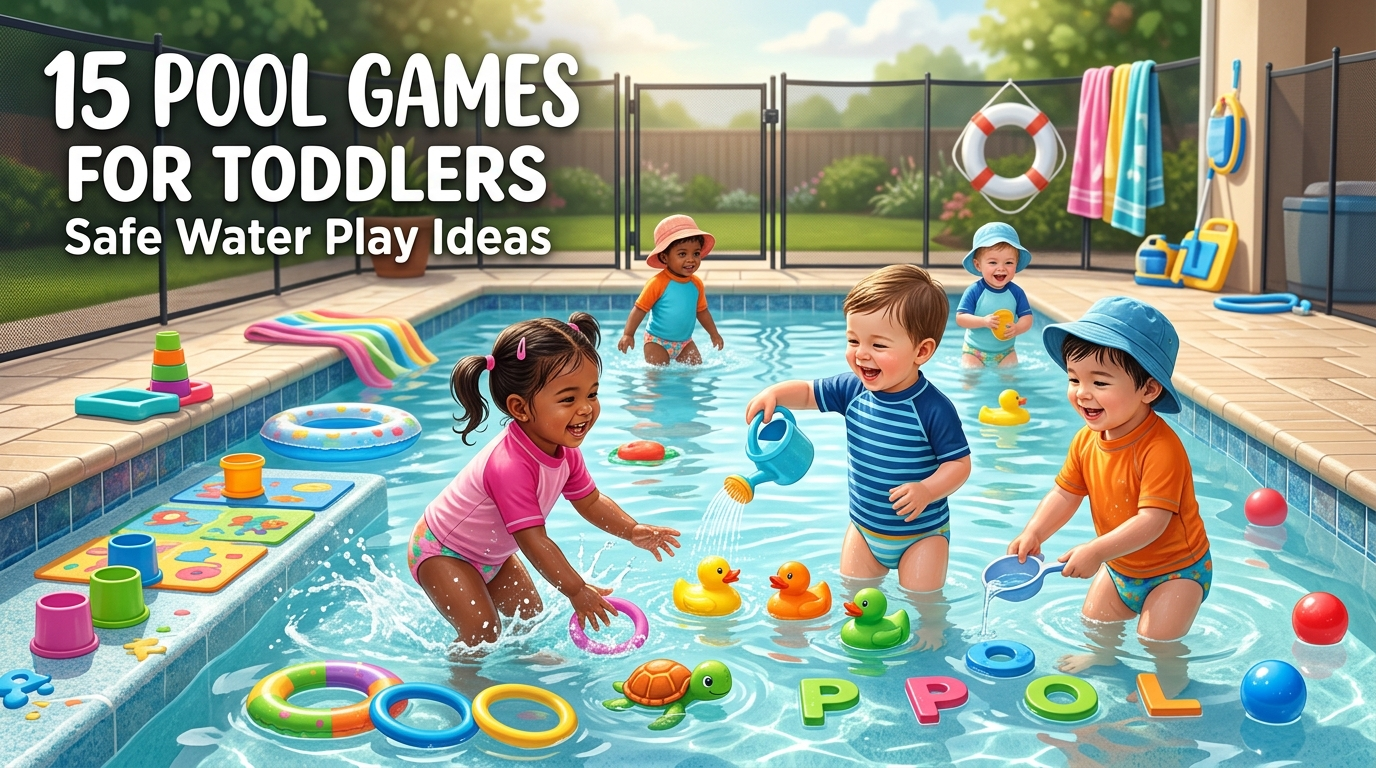
Pool Games for Toddlers can turn a warm Australian afternoon into an enjoyable opportunity for sensory exploration, movement and parent-child interaction. Simple activities such as scooping water, filling cups, moving floating toys and matching colours give young children plenty to explore without complicated equipment.
These toddler pool activities suit children aged 1–3 years, with adjustments for different abilities and interests. You can use a suitable paddling pool, a supervised shallow-water play area or a regular swimming pool with an adult close by. However, no pool game replaces constant, active adult supervision. For toddlers, stay within arm’s reach, keep your full attention on your child and follow local pool safety requirements.
Key Takeaways
- Simple equipment works well: Stacking cups, large floating toys and water-safe balls can support several different games.
- Match games to your toddler: Younger toddlers often enjoy filling and emptying containers, while older toddlers may enjoy colour matching and simple counting.
- Keep activities short and flexible: Follow your child’s interest rather than expecting them to finish every game.
- Make learning part of play: Water games can encourage language, coordination, problem-solving and sensory exploration.
- Supervise every moment: Stay within arm’s reach of a toddler in or around water, without distractions.
- Finish with a safety check: Empty and store portable pools safely, remove toys from the pool area and prevent unsupervised access to water.
What Are Pool Games for Toddlers?
Pool games for toddlers are simple, supervised water-play activities designed for young children who are exploring movement, textures, objects and cause and effect. They can involve pouring water between containers, moving floating toys, splashing gently or identifying colours.
These games do not require swimming skills or formal rules. Instead, they give toddlers opportunities to explore water with a responsible adult beside them. The best activities match a child’s current abilities, use suitable equipment and allow the child to stop whenever they feel uncomfortable.
For Australian families, these activities can work in a suitable backyard setup or during a supervised visit to a swimming pool. Always assess the location before starting. A shallow pool is not automatically safe, and a toddler must never play in or near water without direct adult supervision.
1. Which Pool Games Can Toddlers Play with Cups?
Cup filling and pouring is one of the simplest pool games for toddlers. Give your child a few sturdy, age-appropriate cups and let them transfer water between containers while you stay close enough to reach them immediately.
How to play
- Place two or three stable, wide containers in a suitable shallow-water play area.
- Show your toddler how to scoop water into one cup.
- Pour the water into another container.
- Use simple phrases such as “full cup”, “empty cup”, “more water” and “pour slowly”.
- Let your toddler repeat the action at their own pace.
This activity encourages hand-eye coordination and early problem-solving. Your child begins to notice that tilting a cup changes how water moves. They can also explore words such as full, empty, more and less.
Choose cups without sharp edges, detachable parts or cracks. Avoid tiny containers that a young child might put in their mouth. At the end, empty every container and remove it from the play area.
2. How Can Toddlers Play with Floating Toys?
Floating-toy play encourages toddlers to watch movement, reach for objects and follow simple instructions. Choose large, age-appropriate toys specifically suitable for water play, and keep the activity within your immediate reach.
How to play
- Place one or two suitable floating toys in the water.
- Point to a toy and name its colour or shape.
- Ask your toddler to touch or move the toy towards you.
- Encourage gentle movement through the water.
- Change the direction of the toy while keeping your toddler close.
For example, you might say, “Can you touch the yellow boat?” or “Let’s move the duck towards this cup.”
This game can introduce basic vocabulary and encourage visual tracking. However, do not place toys far away or encourage your child to lean over a pool edge to reach them. Keep every toy within easy reach, and never leave toys in or beside an unattended pool where they could attract a child.
3. What Is the Best Splashing Game for Young Toddlers?
Gentle splashing is a straightforward activity for toddlers who enjoy water on their hands. Keep the water shallow and the movements small, and let your child decide how much splashing feels comfortable.
How to play
- Sit or stand securely with your toddler in a suitable play area.
- Demonstrate a gentle hand movement across the water.
- Invite your child to copy you.
- Make small ripples and watch them travel.
- Pause and talk about what happens when the water moves.
You can introduce words such as splash, ripple, wet, cool and gentle. These descriptions help make the activity interactive without adding complicated rules.
Some toddlers dislike water splashing on their faces. Respect that preference. Keep water away from the face, never force a child to participate and stop if they appear distressed. Avoid rough play, running around the pool and splashing that could interfere with breathing.
4. How Can You Teach Toddlers Colours Through Pool Play?
Colour matching turns a simple water-play session into a learning opportunity. Use a small selection of large, water-safe objects in different colours, and ask your toddler to identify or touch a matching item.
How to play
- Select two or three clearly different colours.
- Name each colour while showing your child the objects.
- Ask your toddler to touch the colour you name.
- Repeat the names during the game.
- Introduce another colour when your child seems ready.
For example, you could say, “Find the red cup” or “Touch the blue toy.” If your toddler does not recognise the colours yet, simply name them while they explore.
This activity supports language exposure, visual attention and early sorting skills. It does not require your child to answer correctly. Repetition and shared attention are enough to make the game useful.
Choose large objects that are appropriate for your child’s age. Never use small counters, marbles, loose beads or other objects that could pose a choking risk.
5. Can Toddlers Play a Water-Scooping Game?
Water scooping gives toddlers a chance to practise controlled hand movements. A sturdy scoop or large cup lets them move water from one container to another while exploring how different movements change the result.
How to play
- Place a wide container and a large, stable receiving bowl in the play area.
- Demonstrate how to collect a small amount of water.
- Move the scoop slowly towards the second container.
- Encourage your toddler to try the same movement.
- Talk about the water that stays in the scoop and the water that spills.
A broad, blunt-edged scoop is easier for small hands to manage than a narrow utensil. Use only equipment designed for young children, and supervise closely to prevent mouthing or unsafe handling.
You can make the activity easier by moving the containers closer together. For a more confident toddler, encourage them to use two hands or transfer water between containers of different sizes.
The goal is exploration, not perfect pouring. Allow spills within the designated play area, then remove standing water and clean up when the activity ends.
6. How Do You Play a Floating Ball Game?
A large, water-safe floating ball can encourage reaching, tracking and gentle turn-taking. Keep the ball close to your toddler, use a clear play area and avoid any movement that requires the child to chase an object across a pool.
How to play
- Choose a ball that is too large to create a choking hazard and is suitable for the child’s age.
- Sit facing your toddler in a safe, stable position.
- Move the ball slowly across the water.
- Invite your child to touch or push it back.
- Take turns moving the ball a short distance.
This game introduces the idea of turn-taking and helps children practise controlled movements. You can add simple language, such as “my turn”, “your turn” and “the ball is moving”.
Do not throw the ball into deep water or encourage your toddler to swim after it. Avoid balls with detachable parts, damaged seams or openings that could trap fingers.
7. What Is a Simple Pool Sorting Game for Toddlers?
A sorting game lets toddlers group large, safe water-play objects by colour, shape or type. Start with just two categories so your child can explore the idea without becoming overwhelmed.
How to play
- Choose a few large, age-appropriate water-safe toys.
- Place two empty containers close together.
- Demonstrate grouping similar items.
- Name the group as you place each object.
- Invite your toddler to copy you if they show interest.
For example, your child might place large yellow objects in one container and blue objects in another. If sorting feels too difficult, simply explore the objects together and describe their differences.
Sorting can introduce early classification and problem-solving. However, the game should never involve small toys or loose pieces that a toddler could swallow.
Keep the containers stable and within reach. Do not allow your child to lean over a pool edge to retrieve objects, and remove all items when you finish.
8. How Can Toddlers Explore Water with a Sponge?
Squeezing a suitable sponge lets toddlers investigate how water enters and leaves a material. It can also encourage controlled hand movements, although the activity requires close supervision because children may try to chew the sponge.
How to play
- Select a large, durable sponge suitable for supervised toddler play.
- Let your child feel the dry sponge before introducing water.
- Demonstrate dipping it into shallow water.
- Show how to squeeze water into a large bowl.
- Repeat the action together while naming wet, dry, heavy and light.
This activity can be especially appealing to children who enjoy tactile exploration. It also provides a quieter alternative to splashing games.
Inspect the sponge before every session. Replace it if it tears, sheds pieces or becomes damaged. Do not use small sponges or products that contain detachable parts.
Stay close and watch your child continuously. Remove the sponge immediately if your toddler starts chewing it, and store it out of reach after play.
9. What Water Games Help Toddlers Learn to Count?
Pool Games for Toddlers Counting games introduce number words through repeated actions. Use a few large, safe toys or cups and count them aloud with your toddler instead of expecting them to understand numbers immediately.
How to play
- Place two or three suitable objects within reach.
- Point to each object as you count aloud.
- Move one object into a container and count again.
- Repeat the process slowly.
- Stop when your toddler loses interest.
For example, you can say, “One cup, two cups” while moving the cups into a container. Older toddlers who enjoy the activity may begin repeating the number words.
Keep counting informal. A child may repeat a number without understanding quantity, and that is a normal part of early learning.
Never use small counting pieces, loose beads or coins around toddlers. Large, age-appropriate objects are easier to supervise and less likely to create choking hazards.
10. How Can You Play a Water Pouring Race Safely?
A gentle pouring challenge encourages toddlers to practise controlled movements and compare what happens when they transfer water. Keep it cooperative rather than competitive, and never encourage running, rushing or splashing near a pool edge.
How to play
- Set up two wide containers in a stable, shallow-water play area.
- Demonstrate pouring a small amount of water into the second container.
- Let your toddler copy the movement.
- Compare the containers using words such as full, empty and more.
- Repeat only if your child remains interested.
You can make the activity easier by choosing lightweight cups and placing the containers close together. Older toddlers may enjoy comparing which container holds more water, although they do not need to measure or count accurately.
Do not use glass containers, sharp-edged utensils or heavy buckets. Keep the game away from pool edges and slippery walking surfaces. The purpose is to explore water, not to finish first.
11. Can Toddlers Enjoy a Water Painting Activity?
Water painting gives toddlers a way to explore marks and movement without conventional paint. A large, water-safe brush and a suitable outdoor surface can create a simple activity beside the pool, provided the area remains separate from any drowning hazard.
How to play
- Choose a safe, non-slip outdoor area away from the pool edge.
- Give your toddler a large, age-appropriate brush.
- Use a small container of water.
- Show your child how to brush water across a suitable surface.
- Watch the marks appear and gradually dry.
This activity suits children who enjoy making marks but prefer a quieter alternative to splashing. You can describe long lines, short lines, circles and dots as your child moves the brush.
Do not let your toddler walk between the painting area and an open pool without direct supervision. Keep the water container within reach and empty it immediately after use.
If the surface becomes slippery, stop the activity and move to a safer area.
12. How Can You Make a Pool Game into Pretend Play?
Pretend play gives toddlers opportunities to copy familiar actions and use new words. With a few large, water-safe toys, you can create a simple story about washing a toy boat or giving a toy animal a bath.
How to play
- Choose one or two toys specifically suitable for water play.
- Describe a simple situation, such as washing a toy boat.
- Demonstrate one gentle action.
- Invite your toddler to copy or change the story.
- Use short sentences to describe what happens.
For example, you might say, “The boat needs a wash” or “Let’s give the duck some water.” Your toddler can respond through gestures, words or their own play ideas.
Choose toys without small detachable parts, batteries or openings that make them difficult to clean and dry. Check the manufacturer’s instructions before putting any toy in water.
Pretend play should remain simple and supervised. Remove all toys after the session and dry them according to their care instructions.
13. What Pool Games Suit Toddlers Who Dislike Splashing?
Toddlers who dislike splashing may prefer quiet water exploration. Gentle pouring, touching a floating object or watching ripples can offer a less intense experience without forcing a child to get wet.
How to play
- Start with a small amount of water in a suitable, supervised play setup.
- Let your child touch the water with their fingers if they choose.
- Show how a gentle movement creates ripples.
- Offer a large floating toy to look at or touch.
- Allow your child to stop or move away whenever they want.
A child does not need to splash, put their face in water or enter a swimming pool to enjoy water-related play. You can also move the activity to a dry area and use a damp sponge or water painting instead.
Follow your toddler’s cues. Never force water contact, and do not assume that a child who enjoys bath time will feel comfortable in a swimming pool.
14. How Can You Create an Easy Pool Obstacle Game?
A toddler obstacle game can combine simple movements such as reaching for a toy, touching a cup and moving a ball. Keep the activity stationary or very short, with no jumping, climbing, running or movement through deep water.
How to play
- Set up two or three large, safe objects in a stable play area.
- Ask your toddler to touch a cup.
- Invite them to move a floating toy towards you.
- Finish by gently pushing a large ball.
- Celebrate participation rather than speed or accuracy.
This game gives toddlers a chance to follow simple instructions and change between different movements. It can also provide opportunities to practise words such as touch, move, stop and give.
Do not create obstacle courses around pool edges or use inflatable structures as stepping stones. Avoid slippery surfaces and any activity that requires a toddler to balance on an unstable object.
For younger or less confident toddlers, remove the sequence and offer one activity at a time.
15. What Is the Best Way to End a Toddler Pool Session?
End water play by moving your toddler away from the water with you, drying and changing them as needed, and securing the area before you turn your attention elsewhere. Never leave a toddler near the pool while you collect towels or tidy up.
A simple end-of-play routine
- Tell your toddler that the activity is finishing.
- Take them with you to a safe area away from the water.
- Dry and dress them as needed.
- Empty portable pools and containers immediately after use.
- Store pool toys securely out of sight and reach.
- Check that pool barriers and gates are secure before leaving the area.
This routine helps separate playtime from unsupervised access to water. It also gives children a predictable ending, which can make transitions easier.
Never assume that a portable pool is safe because it is shallow or empty-looking. Follow local requirements for portable pools, and make sure no water can collect in containers or play equipment after use.
Which Pool Games Are Best for Different Toddler Ages?
The most suitable pool games depend on your child’s movement, attention, communication and comfort with water. Age can guide your choice, but it should never replace direct supervision or the manufacturer’s age recommendations for toys.
| Toddler age | Games to consider | Main play opportunity |
|---|---|---|
| Around 12–18 months | Gentle water touching, cup filling with adult help, watching floating toys | Sensory exploration and cause and effect |
| Around 18–24 months | Scooping, pouring, simple ball movement, naming objects | Hand control, language and shared attention |
| Around 24–36 months | Colour matching, simple sorting, counting objects, pretend play | Early classification, vocabulary and problem-solving |
These are general activity suggestions, not developmental milestones or guarantees. Children develop at different rates. A younger toddler may enjoy watching water move, while an older child may prefer repeating a familiar activity rather than learning a new rule.
Choose toys suitable for the child’s age and abilities. Avoid small parts and activities that require independent swimming, breath-holding or reaching into deep water.
What Equipment Do You Need for Toddler Pool Activities?
Most toddler pool activities require only a few simple items. Sturdy cups, a large water-safe ball, a suitable floating toy and a durable sponge can support several different games, so you do not need to purchase a separate toy for every activity.
| Equipment | Suitable uses | What to check |
|---|---|---|
| Large plastic cups | Filling, pouring and counting | No sharp edges, cracks or detachable parts |
| Water-safe floating toys | Reaching, naming and pretend play | Age suitability and easy cleaning |
| Large water-safe ball | Gentle passing and tracking | Size, durability and safe construction |
| Suitable sponge | Squeezing and transferring water | No loose pieces, tearing or chewing risk |
| Wide containers | Sorting and pouring | Stability, safe edges and easy emptying |
| Large toddler-safe brush | Water painting | Age suitability and a secure handle |
You do not need every item on this list. Start with one or two suitable objects and see what interests your toddler. Household equipment can work, provided it is safe, clean, age-appropriate and designed or suitable for the intended use.
Avoid glass, sharp utensils, small loose objects, damaged toys and products with accessible batteries or magnets. Always check the product label and instructions before using a toy in water.
How Do You Keep Toddlers Safe During Pool Games?
Constant active supervision is the most important safety measure during toddler water play. Royal Life Saving Society Australia advises adults to stay within arm’s reach of children aged 0–5 years and maintain focused attention whenever they are in, on or around water.
Follow these practical precautions:
- Stay within arm’s reach. Get into the water with your toddler when appropriate, or position yourself so you can reach them immediately.
- Give your child your full attention. Put your phone away, avoid household tasks and do not rely on another person to supervise unless you have clearly transferred responsibility.
- Maintain safe barriers. Check that your pool fence and gate comply with applicable state or territory requirements. Never prop a gate open.
- Treat portable pools seriously. Follow local rules for inflatable and portable pools, including requirements that depend on pool depth and type.
- Remove toys after play. Pool toys can attract young children back towards water when no adult is supervising.
- Empty water safely. Empty portable pools, buckets and other containers immediately after use, then store them where children cannot access them.
- Prepare for emergencies. Learn child first aid and CPR, and know how to contact emergency services.
Australian water-safety guidance stresses that children can drown quickly and silently. A shallow pool, flotation toy or swimming lesson does not make unsupervised water play safe.
For further guidance, read the Royal Life Saving Society Australia’s water safety advice and Kidsafe Australia’s pool barrier information. Check your state or territory’s current pool requirements before setting up a portable pool.
How Can Australian Parents Make Pool Play More Comfortable in Summer?
Australian summer conditions can make water play appealing, but parents should plan around heat, sun exposure and their child’s comfort. Choose a suitable time, provide shade where possible, offer regular drinking breaks and stop the activity if your toddler appears uncomfortable.
Use these simple measures:
- Choose a comfortable time. Avoid prolonged outdoor play during the hottest part of the day.
- Provide shade. Set up play in a shaded location where possible, while maintaining a clear view of your child.
- Use sun protection. Follow Australian sun-protection advice, including suitable clothing, a broad-brimmed hat and sunscreen as recommended for your child’s age and circumstances.
- Offer drinking water. Make regular drinking breaks part of the routine.
- Keep sessions flexible. Stop if your child becomes distressed, tired or too hot.
- Check the environment. Look for slippery surfaces, hot equipment and unsafe access points before play begins.
Water play does not replace swimming lessons, water-safety education or appropriate pool barriers. A toddler who appears confident in the water still needs direct supervision.
For broader development ideas, explore Sensory Toys: A Complete Guide for Australian Parents. It explains how ordinary materials, including water and different textures, can support sensory exploration without requiring a large collection of specialist toys.
How Can Pool Games for Toddlers support Development?
Pool games provide opportunities to practise everyday skills through simple actions and shared interaction. Scooping can encourage hand control, matching can introduce classification, and pretend play can give parents opportunities to model new words.
However, no single pool game guarantees a developmental outcome. Toddlers learn at different rates, and the value of an activity depends on the child’s interests, abilities and interaction with the adult.
Here are a few examples:
- Fine motor practice: Gripping a large cup and pouring water involves controlled hand movements.
- Language exposure: Naming colours, objects and actions gives toddlers opportunities to hear and practise words.
- Early problem-solving: Filling and emptying containers helps children observe cause and effect.
- Sensory exploration: Water offers changes in movement, temperature and touch.
- Social interaction: Taking turns with a ball or copying an adult’s actions introduces simple shared play.
Parents can extend these ideas beyond the pool. Stacking cups, large balls and simple pretend-play toys can also support play indoors or in a dry outdoor area.
For more age-based suggestions, read Best Toddler Toys in Australia (12–36 Months). You can also explore the Baby Toys by Age guide for ideas suited to different stages of early childhood.
Frequently Asked Questions About Pool Games for Toddlers
What are the easiest pool games for toddlers?
Cup filling, gentle splashing, touching floating toys and moving a large ball are easy activities to start with. Use age-appropriate equipment, keep the water-play setup suitable for your child and stay within arm’s reach at all times.
How do I entertain a toddler in a small pool?
Start with one or two activities, such as filling cups or moving a floating toy. You do not need a large pool or elaborate equipment. Keep every object close, avoid overcrowding the play area and never leave your toddler alone in or around the water.
Are inflatable pools safe for toddlers?
Inflatable pools still carry a drowning risk. They require active adult supervision, and applicable Australian pool-barrier rules may apply depending on the pool’s depth and type. Empty and store portable pools after use, and check your state or territory’s requirements before setting one up.
What toys are best for toddler pool activities?
Large, age-appropriate cups, durable floating toys and water-safe balls can support several activities. Check product labels, inspect toys for damage and avoid small detachable parts, accessible batteries and other choking hazards. Never assume a toy is suitable for water unless its instructions support that use.
How long should toddlers play in a pool?
There is no single duration that suits every toddler. Keep activities flexible and stop when your child becomes tired, distressed, cold or uncomfortable. Focus on your child’s needs and the conditions rather than aiming for a fixed number of minutes.
Can toddlers learn to swim through pool games?
Pool games can help children become familiar with water, but they do not replace formal swimming lessons or water-safety instruction. Toddlers still require constant active supervision within arm’s reach. Never assume that play, flotation aids or previous lessons make a child safe to be left alone.
What can toddlers do in the pool without toys?
Toddlers can watch ripples, touch the water, make gentle movements with their hands and copy simple actions demonstrated by an adult. Keep the activities calm and age-appropriate. Never encourage a child to put their face underwater, hold their breath or enter water without direct supervision.
What should parents do after pool play?
Take your toddler away from the water, dry and change them as needed, empty portable pools and containers, and store all pool toys securely. Check the pool barrier and gate before leaving the area. Continue restricting access to water even after the activity has ended.
Final Thoughts: Choose Simple Pool Games for Toddlers
The best Pool Games for Toddlers are simple, flexible and suited to your child’s abilities. Cup filling, gentle splashing, floating-toy play and colour matching can turn ordinary water play into an opportunity for shared interaction and exploration.
Start with one or two activities, use appropriate equipment and let your toddler’s interest guide the session. You do not need expensive toys or complicated rules to make water play enjoyable.
Most importantly, keep your child within arm’s reach and give them your full attention throughout the activity. Check pool barriers, remove toys after play and empty portable pools safely. Safe supervision must always come before the game.