Rainy Day Activities for Babies to Enjoy Indoors
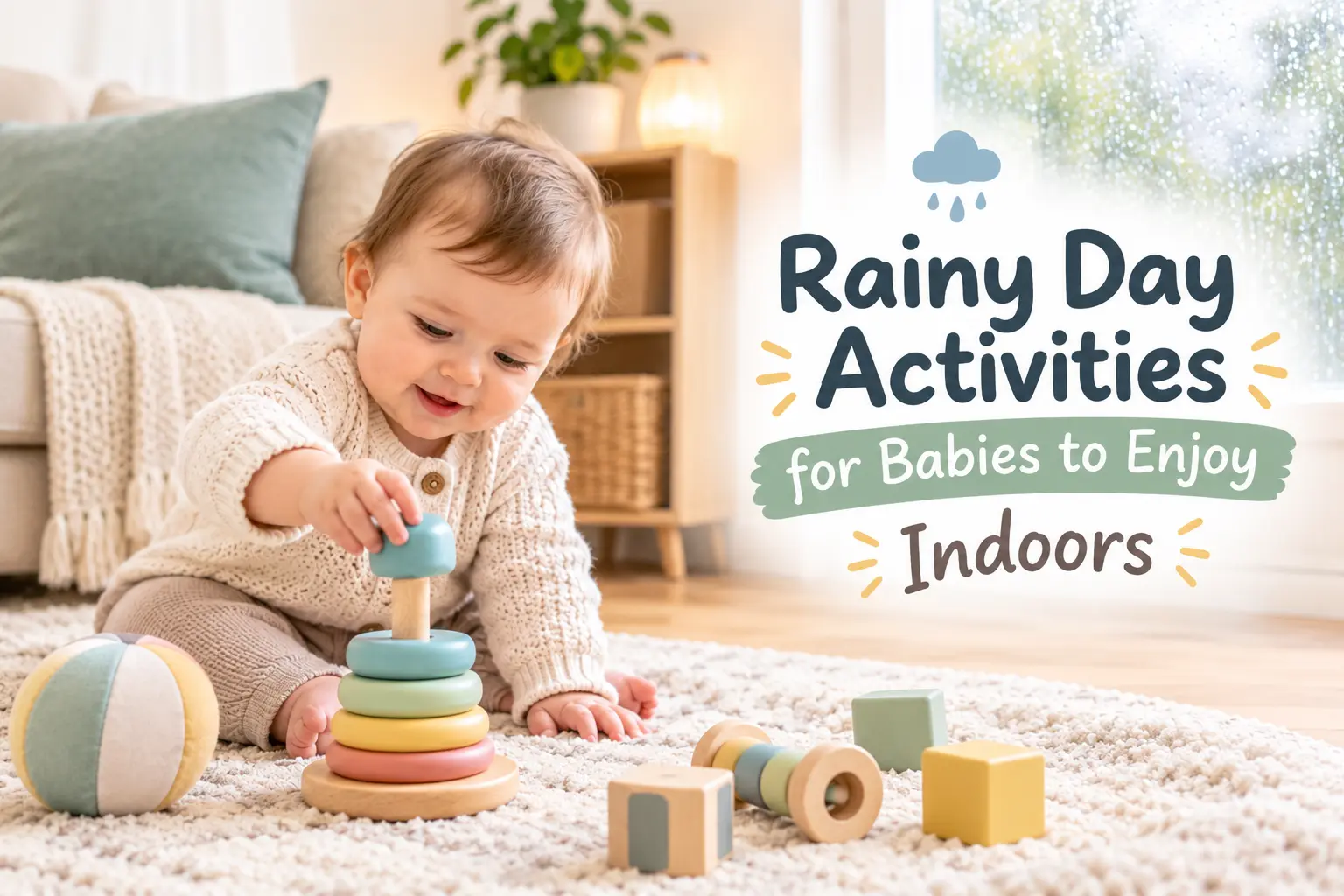
Rainy day activities for babies can turn a wet afternoon into an enjoyable opportunity for sensory exploration, movement, and bonding. Simple ideas such as tummy time, peekaboo, music, board books, and supervised floor play keep babies engaged without requiring expensive toys or elaborate preparation. For Australian parents, these indoor activities also offer practical ways to adapt play to a child’s age, energy, and developing skills.
This guide covers indoor activities for babies from the newborn stage through the first year, plus indoor play ideas for toddlers. You will find easy household activities, age-based suggestions, safety advice, and a flexible rainy-day routine to help you decide what to try next.
Key Takeaways
- Rainy day activities for babies can be simple: Talking, singing, reading, and playing together offer valuable opportunities for learning.
- Choose activities by developmental stage: Newborns benefit from face-to-face interaction, while older babies may enjoy reaching, crawling, and exploring objects.
- Short sessions are enough: Follow your baby’s interest and offer a break when they become tired or overstimulated.
- Everyday objects can support play: Use suitable board books, clean blankets, and age-appropriate household items under close supervision.
- Safety comes first: Keep small parts, loose cords, button batteries, and unsuitable sensory materials away from babies.
- Toys are optional, not essential: A parent’s voice, attention, and willingness to respond can make ordinary moments engaging.
1. What Are the Best Rainy Day Activities for Babies?
The best rainy day activities for babies combine interaction, gentle movement, sensory exploration, and rest. You can start with a short song, offer tummy time, read a picture book, or play peekaboo. Choose one activity at a time and adjust it to your baby’s current abilities.
You do not need to fill every waking minute. Babies learn through repeated experiences, and familiar activities can be just as engaging as new ones.
Here are 15 ideas to try at home.
1. Play Peekaboo Together
Peekaboo is a simple game for babies who enjoy watching faces and responding to familiar people. Hide your face behind your hands, pause briefly, and reveal it with a smile.
Older babies may begin to anticipate the reveal or pull your hands away. These exchanges provide opportunities to practise attention, communication, and the idea that something can disappear from view and return.
Keep the game gentle. If your baby looks away or becomes unsettled, stop and try again later.
2. Make Tummy Time More Interesting
Tummy time gives awake babies opportunities to practise lifting their heads and developing upper-body strength. Place your baby on a firm, clear floor mat and stay close throughout the activity.
For variety, lie down at your baby’s eye level, talk softly, or show an age-appropriate toy within view. Younger babies may prefer chest-to-chest tummy time while you recline, provided you remain awake and attentive.
Australian guidance recommends spreading tummy time throughout the day rather than expecting a baby to complete it in one long session. Follow your baby’s abilities and seek advice from your child and family health nurse if you need help adapting the activity. Always place your baby on their back for sleep. <Entity value=”Pregnancy, Birth and Baby” category=”organization” disambig=”Australian government-supported pregnancy and infant health information service”/> provides further guidance on playing with your baby.
3. Read a Board Book
Reading together is one of the easiest indoor activities for babies because it combines pictures, sounds, and close interaction. Choose a sturdy board book with clear images, familiar objects, or contrasting colours.
You do not need to read every word. Point to a picture, name it, and pause to let your baby look. For example, you might say, “Here is a dog. The dog says woof!”
As your baby grows, invite them to touch the pages or turn them with your help. Keep the session relaxed, even if your little one only stays interested for a few minutes.
4. Sing Songs and Nursery Rhymes
Songs make a rainy afternoon feel lively without adding extra clutter to your home. Sing familiar nursery rhymes, hum a lullaby, or create a simple song using your baby’s name.
Add gentle hand movements when appropriate. Older babies may clap, bounce while supported, or try to copy your actions.
Your voice also gives your baby an opportunity to hear different sounds and rhythms. You do not need musical training or special equipment. Repeating a favourite song can be more enjoyable than introducing a new one every time.
5. Explore Safe Textures
Sensory play introduces babies to different textures, sounds, and sensations. For a simple activity, offer one or two age-appropriate sensory toys and let your baby explore them while you supervise closely.
A washable textured ball, a suitable fabric book, or a sturdy silicone teether can provide variety for babies who reach for and mouth objects. Choose items designed for your child’s age and inspect them for damage before use.
Avoid loose beads, rice, dried pasta, buttons, and similar small objects. They may look suitable for sensory play, but they can present choking hazards when babies explore with their mouths.
For more guidance on choosing appropriate products, see LuxeBabyToys’ sensory toys guide for Australian parents.
6. Enjoy Mirror Play
Babies often find faces fascinating, making mirror play an easy addition to an indoor routine. Use a purpose-made, unbreakable baby mirror and position it securely where your baby can see it during supervised floor play.
Talk about what you see together. Smile, make gentle expressions, or move your head slowly from side to side.
A mirror can also add interest during tummy time. Keep it away from edges and never use ordinary glass or a mirror that could fall onto your baby.
7. Have a Gentle Music Session
Music offers an easy way to introduce sound and movement on a wet day. Play quiet, age-appropriate music or use a soft rattle that is designed for babies.
Hold your baby securely and sway gently if they enjoy movement. Older babies can listen from a clear play area while you clap slowly or tap a rhythm.
Keep the volume comfortable and avoid placing speakers or rattles close to your baby’s ears. If your baby turns away, startles, or seems distressed, lower the volume or stop.
8. Play With a Baby Activity Gym
A baby activity gym can provide a convenient space for reaching, looking, and supervised floor play. Choose a model suited to your baby’s age, and make sure hanging toys remain within safe reach without creating a strangulation hazard.
Younger babies may watch contrasting shapes, while older babies can practise reaching and grasping. You can also remove suitable detachable toys for separate floor play if the manufacturer’s instructions allow it.
Never leave a baby unattended under a play gym. Remove hanging attachments when your baby begins pushing up on their hands and knees, or earlier if the product instructions require it. For age-specific suggestions, explore this guide to toys for babies aged 3–6 months.
9. Try a Soft Ball Rolling Game
A lightweight, age-appropriate soft ball can encourage reaching and movement. Sit facing your baby on the floor and roll the ball slowly within easy reach.
A younger baby might watch it move or attempt to touch it. A sitting baby may reach forward, pick it up, or push it back towards you.
Keep the play area clear and use a ball designed for your child’s age. Avoid balls that can split, release filling, or contain small detachable parts.
10. Create a Baby-Friendly Book Basket
A small basket of suitable books gives older babies a chance to choose what they want to explore. Include sturdy board books and washable fabric books without loose pieces.
Sit nearby and let your baby reach for a book. Name familiar objects, make animal sounds, and allow time for touching the pages.
Keep the selection small so the area stays manageable. Remove the basket if your baby starts climbing on it or pulling it over, and never leave a container that could trap or cover your child’s face.
11. Play Copy-the-Sound
Copy-the-sound games help turn ordinary babbling into a shared interaction. When your baby makes a sound, repeat it gently and pause to see whether they respond.
You can also make simple sounds such as “ba-ba” or “mmm” without expecting your baby to copy them perfectly. Smile, wait, and respond to any movement or vocalisation.
This activity works especially well when your baby is alert and interested in your face. Keep the exchange natural rather than treating it like a lesson.
12. Explore Cause-and-Effect Toys
Cause-and-effect play lets babies discover that their actions can produce a result. For example, an older baby might shake a suitable rattle to hear a sound, knock over a soft stack of blocks, or drop a large, age-appropriate toy while sitting on the floor.
Show the action once, then allow your baby to explore at their own pace. Repeat the game if they seem interested.
Choose sturdy toys without small detachable parts, exposed batteries, or sharp edges. Avoid products designed for older children, even if they appear simple.
13. Make a Simple Obstacle-Free Crawling Space
Babies who are beginning to crawl may enjoy moving towards a familiar adult or a favourite safe toy. Clear a section of floor, remove trip hazards, and encourage movement by sitting a short distance away.
Let your baby choose whether to move. Some will crawl towards you, while others will roll, pivot, or reach from where they are.
Do not use unstable cushions, raised surfaces, or improvised tunnels that could collapse or obstruct breathing. The goal is safe movement on a clear, level surface, not a challenging obstacle course.
14. Dance Gently With Your Baby
Gentle dancing offers a change of pace when everyone feels restless indoors. Hold a young baby securely with their head and neck supported, and sway slowly to a familiar song.
Older babies can enjoy music while sitting or standing with appropriate support, provided the setup is stable and safe. Never shake, toss, or bounce a baby vigorously.
Stop if your baby appears uncomfortable, and avoid dancing while carrying hot drinks or moving around slippery floors.
15. Take a Rainy-Day Window Break
You can introduce your baby to the changing weather without going outside. Sit together near a secure window and describe what you see, such as raindrops, moving clouds, trees, or passing cars.
Use simple words and repeat them naturally. An older baby may point, reach, or make sounds in response.
Keep your baby well away from open windows, cords, blinds, and climbable furniture. You can also look at the rain from a safe indoor spot while listening to its sound.
2. Which Indoor Activities Suit Babies at Different Ages?
The best indoor activities for babies depend on what they can comfortably see, hear, reach, and do. Newborns usually enjoy close interaction, while older babies benefit from opportunities to grasp objects, sit, crawl, and explore. Age ranges are useful guides, but your baby’s cues and abilities should determine the activity.
| Baby’s age | Suitable indoor activities | What to focus on |
|---|---|---|
| 0–3 months | Face-to-face chats, singing, short tummy-time sessions | Visual attention, bonding and early movement |
| 3–6 months | Mirror play, soft rattles, textured toys, board books | Reaching, grasping and sensory exploration |
| 6–9 months | Peekaboo, rolling a soft ball, supervised floor play | Sitting, movement and cause-and-effect learning |
| 9–12 months | Crawling games, stacking cups, simple interactive books | Exploring, coordination and problem-solving |
| 12–24 months | Large blocks, pretend play, simple sorting and movement games | Early language, imagination and independent exploration |
These are general suggestions, not developmental deadlines. Some babies need simpler activities for longer, while others quickly become interested in new challenges.
For newborn-specific ideas, read LuxeBabyToys’ guide to playing with a newborn. If your child is approaching their first birthday, the guide to the best toys for babies aged 6–12 months can help you choose suitable play materials.
3. How Can You Keep a Baby Entertained Indoors Without Buying Toys?
You can keep a baby entertained indoors using your voice, facial expressions, books, and safe household routines. Babies do not need a new toy for every activity. Familiar interactions give them opportunities to practise attention, movement, and communication.
Try these low-cost ideas:
- Sing during nappy changes: Use the same short song to make a familiar routine more engaging.
- Talk while folding laundry: Describe the colours and actions while keeping your baby safely away from laundry piles, baskets, and cords.
- Look at family photographs: Hold a photograph securely and name the familiar people in it.
- Play hand games: Try gentle clapping games or finger rhymes with babies who enjoy them.
- Explore safe household sounds: Let your baby listen as you gently tap a suitable, unbreakable object, keeping it out of reach if it is not designed for infant play.
- Narrate everyday activities: Explain what you are doing during feeding preparation, dressing, or tidying while your baby stays in a safe place.
Avoid giving babies improvised toys made from plastic bags, bottle caps, loose fabric strips, balloons, or containers with small parts. Household items are not automatically safe just because they are familiar to adults.
4. How Can You Make Sensory Play Safe for Babies?
Safe sensory play gives babies opportunities to experience different sights, sounds, and textures without exposing them to choking, ingestion, or injury hazards. Start with one suitable material or toy, supervise closely, and keep the activity simple.
Use this checklist before starting:
- Choose age-appropriate materials. Check the recommended age and product instructions.
- Inspect each item. Remove damaged toys, loose stitching, detachable decorations, and anything with sharp edges.
- Consider mouthing. Babies frequently explore objects with their mouths, so avoid small objects, loose sensory fillers, and unsuitable materials.
- Keep the area clear. Remove cords, plastic packaging, small household objects, and other hazards.
- Stay within reach. Watch your baby throughout the activity and intervene if they put an unsafe item in their mouth.
- Clean up straight away. Put away materials before moving on to feeding, nappy changes, or other activities.
The Australian Competition and Consumer Commission (ACCC) warns that small parts, accessible button batteries, and damaged toys can pose serious risks to young children.
Which sensory activities should you avoid?
Avoid sensory setups that use uncooked rice, dry beans, beads, water beads, loose buttons, or similar small items. These can create choking hazards, especially when a baby is learning to grasp and mouth objects.
Water play also needs close attention. Never leave a baby alone near a bowl, bucket, bath, or other container of water, even if it contains only a small amount. For young babies, a dry sensory activity is often easier to supervise and clean up.
5. How Can You Plan a Rainy Day Routine for Your Baby?
A flexible routine helps you offer a variety of indoor activities without overstimulating your baby. Alternate active play with quiet interaction, feeding, cuddles, and rest. Follow your baby’s normal sleep and feeding needs rather than trying to stick to a strict entertainment schedule.
Here is an example you can adapt to your household.
| Part of the day | Activity idea | How to adapt it |
|---|---|---|
| Morning | Singing and face-to-face play | Keep it calm for a young baby |
| After the first feed | Tummy time or supervised floor play | Use short sessions and follow your baby’s cues |
| Late morning | Board books or mirror play | Repeat familiar activities |
| After lunch | Crawling games or soft-ball play | Suitable for babies who are developmentally ready |
| Afternoon | Nursery rhymes or quiet sensory play | Reduce stimulation if your baby seems tired |
| Before bedtime | Gentle talking and a familiar book | Follow your usual wind-down routine |
This is an example, not a prescribed timetable. A newborn may need several short interactions between feeds, while an older baby may show interest in longer periods of floor play. Either way, it is fine to repeat a favourite activity or abandon a plan that is not working.
How do you know when your baby needs a break?
Watch your baby rather than the clock. Turning away, fussing, arching the back, or losing interest may mean your baby needs a break, a feed, a cuddle, or sleep.
Pause the activity, reduce noise, and offer comfort. If your baby becomes settled and alert later, you can try again.
6. What Indoor Play Ideas Work for Toddlers on Rainy Days?
Indoor play ideas for toddlers should offer more opportunities for movement, simple choices, imitation, and pretend play than activities designed for young babies. Children aged 1–3 years may enjoy building towers, dancing to music, looking at picture books, or helping with simple everyday tasks.
Try these toddler-friendly variations:
- Build a block tower: Use large, age-appropriate blocks and take turns adding pieces.
- Copy animal movements: Invite your toddler to waddle like a duck or stretch like a cat.
- Make a pretend picnic: Use toy food or familiar pretend-play items that are safe for the child’s age.
- Play a colour-finding game: Ask your toddler to point to a red book or a blue toy.
- Try a simple movement trail: Walk between safe floor markers made from large, flat items that cannot slip or become choking hazards.
- Explore picture books together: Ask simple questions about familiar objects and let your toddler point or answer.
Keep activities age-appropriate. Items that are safe for an older toddler may not be safe for a crawling baby in the same room. Separate small toys and other hazards, and supervise both children closely.
For more age-specific ideas, explore LuxeBabyToys’ guide to the best toddler toys in Australia.
7. Which Toys Are Worth Keeping for Rainy Days?
A small selection of versatile, age-appropriate toys is usually enough to provide variety on rainy days. Choose products that match your baby’s current skills, are easy to clean, and can be used in more than one way.
| Toy type | How it can support indoor play | What to check |
|---|---|---|
| Board books | Looking, listening and early language | Strong pages without detachable parts |
| Soft rattles | Sound exploration and grasping | Secure construction and suitable age grading |
| Textured grasping toys | Touch and reaching | No loose pieces or accessible filling |
| Baby activity gyms | Looking, reaching and batting | Stable construction and safe attachments |
| Stacking cups | Grasping and simple cause-and-effect play for suitable ages | Appropriate size and no sharp edges |
| Unbreakable baby mirrors | Visual attention and supervised tummy time | Secure placement and no cracks |
There is no need to buy every item on the list. Start with what you already own and add products only when they meet a genuine need.
Before buying, read the packaging and safety information. The ACCC’s kids’ toys safety guide explains how to identify common hazards and choose toys suited to children under three.
8. Why Is Indoor Play Important for Babies?
Indoor play gives babies opportunities to interact with caregivers, explore their surroundings, and practise emerging skills, even when outdoor activities are limited by rain. It does not need to look like a formal lesson. Talking, singing, reaching, and responding to your baby’s sounds all provide useful opportunities for interaction.
The Australian government-supported service Pregnancy, Birth and Baby explains that play helps babies develop movement, communication, social skills, and understanding of the world. Its guidance also stresses the value of responsive interaction and safe, age-appropriate activities. Read more in its article on how your baby’s brain develops.
Indoor play also helps parents adapt to changing weather without feeling that every rainy day needs a special outing. A book, a familiar song, or a few minutes of floor play can be enough.
However, activities should suit your baby’s health, development, and energy level. If you have concerns about your child’s movement, hearing, vision, or development, speak with your GP or child and family health nurse.
Frequently Asked Questions
1. What are the easiest rainy day activities for babies?
The easiest rainy day activities for babies include singing, peekaboo, board books, gentle mirror play, and supervised tummy time. These activities require little equipment and can be adapted to different ages. Start with one idea and stop when your baby needs a break.
2. How do I entertain a 3-month-old on a rainy day?
A 3-month-old may enjoy face-to-face interaction, gentle songs, high-contrast pictures, short tummy-time sessions, and watching a safe mirror. Keep activities calm and brief. Your baby may prefer looking and listening rather than reaching for toys.
3. What can I do indoors with a 6-month-old baby?
A 6-month-old may enjoy soft rattles, textured toys designed for infants, board books, mirror play, and supervised floor activities. Choose activities that match your baby’s abilities. Keep small objects, loose parts, and unsuitable household materials out of reach.
4. Are sensory activities safe for babies?
Sensory activities can be suitable for babies when they use age-appropriate materials and close adult supervision. Avoid loose fillers, small objects, accessible batteries, and damaged toys. Babies who mouth objects need particular care because choking hazards may not be obvious.
5. How long should babies play indoors?
There is no single play duration that suits every baby. Offer activities during awake periods and follow signs of interest, tiredness, or overstimulation. Several short interactions may work better than one long session, especially for newborns.
6. What are good indoor play ideas for toddlers when it rains?
Toddlers may enjoy building towers with large blocks, dancing, pretend picnics, picture books, and simple movement games. Choose activities that encourage exploration without creating fall or choking hazards. Keep toys with small parts away from babies who share the room.
7. Do I need special toys for rainy day activities?
No. Your voice, facial expressions, board books, and safe floor play can provide plenty of variety. Age-appropriate toys can add new ways to explore sound, movement, and texture, but parents do not need to purchase a separate toy for every activity.
Make Rainy Days Easier With Simple Baby Play
Rainy day activities for babies do not have to be complicated or expensive. A few minutes of tummy time, a familiar song, a board book, or a gentle game of peekaboo can make an ordinary day indoors more engaging.
Choose activities that suit your baby’s age and interests, keep safety at the centre of every session, and allow plenty of time for feeds, cuddles, and sleep. If your baby loses interest, change the activity or take a break.
For more ideas, explore LuxeBabyToys for age-appropriate toy guides and practical inspiration for play at home.