How to Teach Toddlers to Count: A Practical Guide for Parents
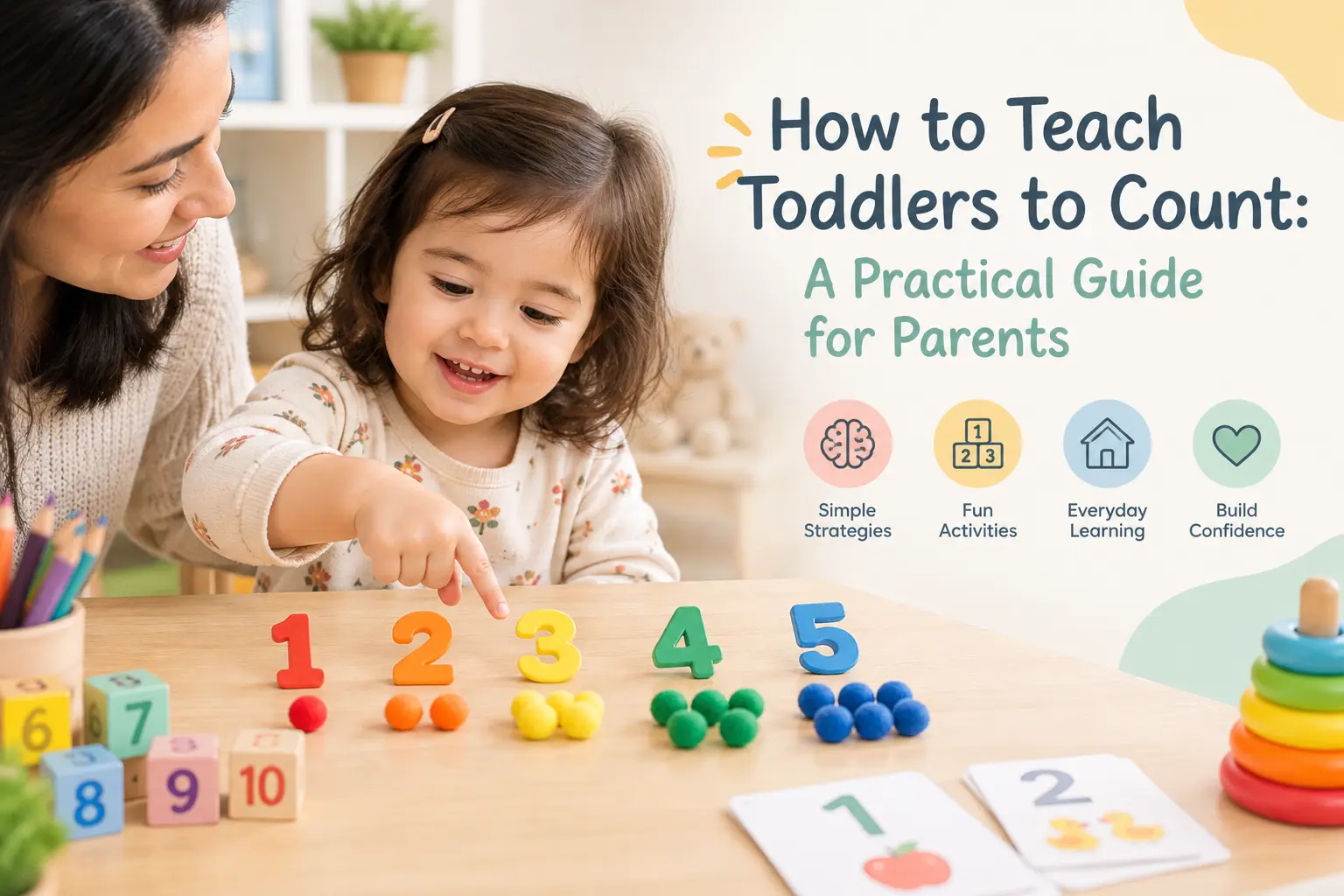
Learning to count starts with everyday experiences, not worksheets. The best way to teach toddlers to count is to say numbers aloud, point to objects one at a time, play simple counting games and connect number words with real quantities. Parents can begin with one, two and three objects before gradually introducing larger groups.
This guide is for parents and caregivers who want to make early maths enjoyable at home. You will learn how to teach numbers to toddlers, which counting activities to try, how to choose suitable educational toys and what to do when your child can recite numbers but cannot count objects accurately.
Key Takeaways
- Toddlers can explore number words and quantities through everyday play, even before they can count independently.
- Start with small groups of one to three objects before introducing larger collections.
- Point to or move each object as you say its number to develop one-to-one correspondence.
- Counting toys for toddlers can make abstract number concepts easier to explore through hands-on play.
- Songs, picture books, snack time, bath time and walks provide natural opportunities to practise counting.
- Children develop early maths skills at different rates, so focus on understanding and enjoyment rather than speed.
How Do You Teach Toddlers to Count?
To teach toddlers to count, start by counting familiar objects together, such as blocks, toys, fruit or steps. Say each number clearly and match it to one object. Once your toddler becomes comfortable with small groups, gradually introduce more objects and ask simple questions such as, “How many blocks do we have?”
The goal is to help children understand what numbers mean, not simply memorise a sequence. The US Institute of Education Sciences explains that counting develops through several connected skills, including saying number words in order, matching number words to objects and understanding that the last number counted tells you the total. Read its family guide to early maths.
Start with one, two and three
Place three large, age-appropriate blocks in front of your toddler. Touch the first block and say “one,” touch the second and say “two,” then touch the third and say “three.”
Repeat the activity with different objects. Your toddler may initially repeat your words without matching them to the objects. That is a normal part of learning. Keep modelling the correct action rather than asking your child to perform perfectly.
Expand the counting range gradually
When your child starts matching number words to individual objects, introduce groups of four and five. Later, work towards counting ten objects and beyond as your toddler becomes ready.
There is no need to rush. A child who understands three objects may be developing a stronger foundation than a child who recites ten numbers without understanding their meaning.
At What Age Should Toddlers Start Learning Numbers?
Toddlers can encounter number words during everyday interactions from a very young age. However, recognising a number word, reciting a counting sequence, identifying a numeral and accurately counting a group of objects are different skills that develop over time.
Parents should use age as a general guide, not a strict deadline. The Centers for Disease Control and Prevention (CDC) provides age-based developmental information, but a milestone checklist does not replace an individual assessment.
| Approximate age | Useful learning activities | What to focus on |
|---|---|---|
| 12–18 months | Count toes, toys and everyday actions aloud | Hearing number words and noticing quantities |
| 18–24 months | Count one to three familiar objects together | Connecting words with objects |
| 2–3 years | Count small groups, match objects and explore number books | Practising one-to-one counting and early number recognition |
| Around 3 years and beyond | Count larger groups and compare quantities when ready | Building accuracy and understanding total amounts |
These are flexible activity suggestions, not guaranteed developmental milestones.
Follow your child’s interest
If your toddler enjoys stacking blocks, count the blocks as you build. If they prefer animals, count toy animals instead. Familiar objects make the activity meaningful, and a child’s interest often provides a better starting point than a fixed lesson plan.
What Is the Best Way to Teach Numbers to Toddlers?
The most effective approach combines spoken numbers, visible objects and repeated hands-on practice. A toddler needs opportunities to hear a number, see the corresponding quantity and eventually try counting independently.
Early maths guidance from the National Association for the Education of Young Children (NAEYC) recommends incorporating mathematical language into ordinary interactions. This allows parents to support learning without turning every activity into a formal lesson.
Teach one skill at a time
Use this simple progression when teaching numbers to toddlers:
- Hear the number: Say “one, two, three” during play.
- See the quantity: Show one block, then two blocks, then three.
- Match numbers to objects: Touch each block as you count.
- Answer how many: Count three blocks together, then say, “We have three blocks.”
- Practise independently: Let your child try while you offer help when needed.
Move between these stages according to your toddler’s understanding. A child may recognise a group of two objects before being able to count five objects correctly.
Use the same language consistently
Keep instructions short. Say, “Let’s count the cars,” instead of giving several directions at once. Pause after counting and repeat the total: “One, two, three. Three cars!”
This final statement helps connect the last number word with the size of the group.
What Counting Activities Can Toddlers Do at Home?
The easiest counting activities use objects that are already part of your child’s day. You do not need expensive equipment or a dedicated learning space. A few minutes of shared play can create useful opportunities to practise numbers and quantities.
1. Count toys during tidy-up time
Ask your toddler to put three blocks into a basket. Count each block as it goes inside, then look into the basket together and say, “There are three blocks.”
This activity combines counting with a familiar routine. As your child gains confidence, ask them to pass you one toy, then two toys, and eventually a larger number.
2. Count steps while walking
Count the steps as you walk towards the garden, playground or another familiar destination. Keep the pace slow enough for your toddler to hear the numbers clearly.
You can also count safe, ordinary movements, such as claps or jumps. The movement gives each number a clear action, which can help your child connect the spoken sequence with individual events.
3. Count fruit at snack time
Place two or three pieces of suitable fruit on a plate. Touch each piece while counting, then ask, “How many pieces do we have?”
Once your toddler understands the activity, compare quantities: “You have two pieces. I have one. Who has more?” Keep the conversation simple and avoid expecting an immediate answer.
4. Build and count towers
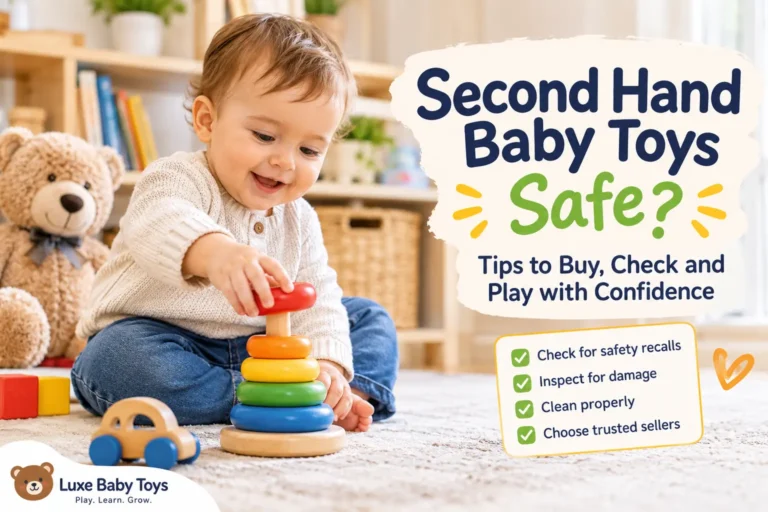
Use large, toddler-safe stacking blocks to build a short tower. Count each block as you add it, then count the tower again from the bottom to the top.
Afterwards, remove one block and explain that the tower now has one fewer block. This introduces the idea that quantities change when objects are added or removed.
5. Count during bath time
Count suitable bath toys as your child places them in a container or lines them up on a ledge. You can also describe quantities using words such as “one more,” “two ducks” and “all gone.”
Adult supervision is essential around water. Keep small objects out of reach and use only toys suitable for your child’s age.
6. Read number picture books
Choose books with clear pictures of familiar objects, such as animals, vehicles or fruit. Point to the illustrations and count a small group together.
Avoid rushing through every page. Let your toddler point, name an object or repeat a number. Reading the same counting book repeatedly can provide another opportunity to practise familiar number words.
7. Sort objects by type
Give your toddler a small collection of large, safe toys, such as blocks and toy animals. Sort them into separate groups and count each group together.
For example, place three animals in one group and two blocks in another. This activity combines counting with matching, classification and comparing quantities.
Which Counting Toys for Toddlers Are Worth Buying?
The best counting toys for toddlers make it easy to see, touch, move and group objects. Choose toys that match your child’s current skills rather than toys with the largest number of features.
Parents exploring educational toys at Luxe Baby Toys can use the following criteria when selecting products for early number learning. Check the individual product’s recommended age, dimensions, materials and safety information before purchasing.
| Toy type | Counting skill supported | Best way to use it |
|---|---|---|
| Large stacking blocks | Counting objects in sequence | Add one block at a time and count aloud |
| Number puzzles | Early numeral recognition | Match a number piece with its printed symbol |
| Counting bears or figures | One-to-one counting and sorting | Move each figure into a separate group |
| Counting cups | Matching quantities and grouping | Put one object in each cup, then count the filled cups |
| Shape sorters | Matching and classification | Sort by shape and count each group |
| Number picture books | Number vocabulary and visual recognition | Count illustrated objects together |
Choose toys that match the learning goal
A stacking toy is useful when your toddler needs to practise counting physical objects. A number puzzle is more appropriate when your child is beginning to notice written numerals. A sorting toy combines number practice with comparisons and classification.
No single toy teaches every early maths skill. Combining a few simple toys with everyday activities usually gives children more varied opportunities to practise.
Check safety before buying
Choose toys designed for your child’s age, with sturdy construction and no accessible small parts that could pose a choking risk. Inspect toys for damage, follow the manufacturer’s instructions and supervise play.
Counting activities should never require toddlers to handle loose coins, small beads or other objects that are unsafe for their developmental stage.
How Can You Teach a Toddler to Count from 1 to 10?
Teach counting from one to ten by introducing small groups first, then gradually increasing the number of objects. Count real items together, point to each one and repeat the final number to show how many objects are in the group.
Use this simple progression as a flexible practice plan.
- Days 1–2: Count one to three. Use blocks, toy animals or pieces of fruit. Touch one object per number.
- Days 3–4: Repeat and recognise quantities. Show one, two or three objects and name the quantity. Let your child hand you a requested number of objects.
- Days 5–6: Introduce four and five. Add one object at a time to a small group. Count the group again after each addition.
- Day 7 onwards: Extend the sequence. Introduce six to ten when your toddler is comfortable with smaller groups. Use toys, songs, books and household routines to practise.
This is a sample sequence, not a seven-day deadline. Your toddler may need more time at any stage, and repeating an earlier activity is perfectly appropriate.
Practise counting objects, not just number words
Ask your child to give you two blocks rather than simply asking them to recite “one, two, three.” This tests a different skill: connecting a number word with a quantity.
If your toddler gives you one block instead of two, demonstrate the task again. Put two blocks in front of them, count aloud and explain what you are asking for.
Why Can Toddlers Say Numbers but Still Struggle to Count?
A toddler can memorise a counting sequence without understanding that each number represents a specific quantity. Saying “one, two, three, four, five” is verbal counting, while accurately counting five objects requires the child to coordinate the number sequence with individual items.
The Institute of Education Sciences’ family resource describes how these early counting skills develop together over time.
Understand three important counting skills
One-to-one correspondence: Each object receives one number word. A toddler who says “one, two, three” while pointing to the same block three times is still learning this skill.
Cardinality: The last number counted represents the total quantity. For example, after counting three cars, the child understands that there are three cars altogether.
Number recognition: The child begins to connect a written numeral, such as 3, with the spoken word “three” and a group of three objects.
These skills are related, but they are not identical. A child may learn one before another, so parents should practise the specific skill their toddler is ready to explore.
What should you do when your child makes mistakes?
Model the correct action calmly. Spread three blocks apart, point to each one and count slowly. Then say, “We counted three blocks.”
Avoid repeatedly testing your child or correcting every attempt. Learning improves through opportunities to explore, observe and try again without pressure.
How Do Counting Songs and Games Help Toddlers Learn?
Counting songs and repetitive games give toddlers opportunities to hear number words in a predictable sequence. Clapping, bouncing gently or moving a toy once for each number can also help connect counting words with individual actions.
Songs are useful for practising the sequence, but they do not automatically teach a child to count a group of objects. Combine singing with hands-on activities so your toddler can explore both skills.
Try three simple counting games
- Finger-counting song: Hold up fingers as you count from one to five. Let your toddler copy the movements.
- Toy hide-and-find: Hide two or three suitable toys in easy-to-find places. Count each toy as your child discovers it.
- Clap and count: Clap three times together, saying one number for each clap. Pause and ask how many claps you made.
The CDC recommends playing counting games with everyday objects and actions as part of activities for young children. See its developmental milestone resources for further guidance.
How Can You Teach Numbers Without Worksheets or Screens?
Use objects your toddler can physically handle and activities that already happen throughout the day. You can teach number concepts while getting dressed, preparing food, putting away toys or walking outdoors.
For example, ask your toddler to find two shoes, put one spoon beside each place setting or count three steps to a familiar destination. These tasks give number words a clear purpose.
Build counting into daily routines
| Daily routine | Example counting activity |
|---|---|
| Getting dressed | Find two shoes or two socks |
| Mealtimes | Count three suitable food pieces |
| Tidying up | Put four large blocks into a basket |
| Outdoor walks | Count three trees or benches |
| Story time | Count animals in a picture |
| Building play | Add and count each block |
You do not need to count everything. Choose a few natural moments when your child is interested and has time to participate.
The Head Start early maths guidance also recommends using everyday experiences, songs, play and mathematical language to support early learning.
How Do You Know If Your Toddler Is Making Progress?
Look for growing understanding rather than counting speed. Your toddler may begin by listening to number words, then copying them, pointing to objects during counting and eventually giving you a requested quantity.
Progress can appear in small ways. A child might recognise that two toys are different from one toy before accurately counting a larger group.
Watch for these signs during ordinary play:
- Your toddler shows interest when you count objects.
- They begin repeating number words in a familiar sequence.
- They point to or move individual objects as you count.
- They can sometimes give you one or two requested objects.
- They start noticing differences between smaller and larger groups.
- They connect a familiar number word with a small quantity.
These examples are informal observations, not a diagnostic checklist or a set of age-specific milestones.
What if your toddler is not interested?
Stop the activity and try again another time. Some toddlers prefer movement, while others enjoy books, sorting toys or copying actions. Change the activity to suit your child’s interests rather than insisting on a particular game.
If you have concerns about your child’s overall communication, learning or development, speak with your child’s healthcare professional. The CDC’s developmental resources can help you prepare questions for that conversation.
What Mistakes Should Parents Avoid When Teaching Counting?
The biggest mistake is expecting toddlers to understand every counting skill at once. A child may enjoy counting songs but need more practice matching number words to objects. Another child may recognise small quantities but show little interest in reciting numbers.
Keep activities short, use clear examples and allow your toddler to participate at their own pace.
Avoid these common teaching mistakes
Starting with too many objects: Begin with one to three items. Larger groups can make it harder for a beginner to keep track of what has already been counted.
Counting too quickly: Slow down and touch each object once. Your toddler needs time to see the connection between the number word and the item.
Relying only on memorisation: Songs and repetition help children practise the number sequence, but children also need physical objects and opportunities to explore quantities.
Moving to written numerals too soon: Numeral puzzles and number cards can be useful, but first give your toddler opportunities to connect number words with actual objects.
Turning play into a test: Avoid asking the same question repeatedly when your toddler is tired or distracted. Demonstrate the activity instead.
Comparing children: Development varies, and children do not all acquire counting skills in the same order. Focus on your child’s progress rather than comparing them with siblings or friends.
A Simple Counting Routine Parents Can Use Every Day
A short, repeatable routine can make counting a familiar part of family life. Aim for a few minutes of playful interaction rather than a formal lesson, and stop when your toddler loses interest.
Try this example:
- Morning: Count two shoes or two socks while getting dressed.
- Playtime: Count three blocks as you build a tower.
- Snack time: Count two or three pieces of suitable fruit.
- Story time: Count the animals or objects on one page.
- Evening: Sing a counting song and use your fingers to show the numbers.
You can adapt this routine to your child’s interests and attention span. There is no need to complete every activity daily.
For parents choosing learning materials, start with one or two versatile toys, such as large stacking blocks and a simple number puzzle. Explore Luxe Baby Toys for age-appropriate educational play options, and check individual product details before choosing a toy.
Frequently Asked Questions
1. What is the easiest way to teach toddlers to count?
Start with one to three familiar objects. Point to each object as you say its number, then repeat the final number to show the total. Practise with toys, snacks and daily routines before gradually introducing larger groups.
2. Should a two-year-old be able to count to ten?
Children develop counting skills at different rates. Some two-year-olds may recite several numbers, while others are still connecting number words with objects. Reciting to ten is not the same as accurately counting ten items, so consider understanding and progress rather than a fixed deadline.
3. What are the best counting toys for toddlers?
Large stacking blocks, simple number puzzles, counting figures, counting cups and number picture books can all support early maths. Choose toys that are suitable for your child’s age and target a specific skill, such as matching, counting individual objects or recognising numerals.
4. How long should a toddler practise counting each day?
There is no universal daily time requirement for counting practice. Short activities of a few minutes can fit naturally into play and everyday routines. Continue when your toddler is interested, and take a break when they become tired, frustrated or distracted.
5. Why does my toddler skip numbers while counting?
Toddlers are still learning the correct sequence of number words and how to coordinate those words with objects. Model the sequence slowly, point to one object at a time and repeat familiar activities. Avoid expecting consistent accuracy before your child is ready.
6. When should I introduce written numbers?
Introduce written numerals gradually alongside physical objects. For example, show the number 2 beside two blocks and say, “This is the number two.” Your toddler does not need to recognise every numeral before practising counting real objects.
7. Can counting toys replace everyday learning activities?
No. Counting toys provide useful hands-on practice, but everyday interactions help children connect numbers with real experiences. Combine toys with songs, picture books, sorting, snack time and other familiar routines for a wider range of learning opportunities.
Help Your Toddler Build a Strong Foundation in Counting
The best way to teach toddlers to count is to connect number words with real objects, repeat simple activities and allow understanding to develop gradually. Start small, count together and introduce more challenging activities when your child is ready.
Counting toys for toddlers can support this process, but you do not need a large collection of educational products. A few safe, versatile toys and regular opportunities to practise can make early maths part of everyday play.
Keep the experience relaxed. Your toddler does not need to master counting on a schedule; they need opportunities to explore numbers, ask questions and enjoy learning with you.