Beach Play for Toddlers: Safe Games, Sand Ideas and a Beach-Day Plan

The best beach activities for toddlers are sand digging, bucket filling, shell hunts, shallow-water splashing and simple ball games. Each one keeps a toddler close to you, builds motor skills and needs almost no equipment. Safety comes first, so an adult must stay within arm’s reach whenever a toddler is near water.
This guide is for parents and carers of children aged 12 to 36 months. After reading it, you can pick age-appropriate toddler beach games, pack the right gear and run a calm beach day. Furthermore, you will find a safety checklist and a timed plan.
Key Takeaways
- An adult must stay within arm’s reach of a toddler near water, even in a few centimetres of depth.
- Sand digging and bucket play suit almost every toddler aged 12 to 36 months.
- Sunscreen of SPF 30 or higher, a hat and UPF clothing work best together, not alone.
- A first beach visit should last 60 to 90 minutes, then end before the toddler melts down.
- Dry sand suits digging, while wet sand suits moulding, driving toys and footprints.
- Skip the beach on days with high UV, strong surf or sharp winds.
What are the best beach activities for toddlers?
The best beach activities for toddlers are digging, filling and emptying buckets, hunting for shells, splashing at the water’s edge and rolling a soft ball. These activities work because they match what toddlers already do: scoop, pour, carry and test cause and effect. They also need no skill and almost no setup.
Start with sand play, since it keeps a child seated and in the shade of your tent. Next, add short ankle-deep water play. Finally, finish with a movement game such as chasing bubbles. This order moves from calm to active, so your toddler stays engaged without wearing out early.
Keep every activity under ten minutes. Toddlers switch interests fast, therefore a bag of five simple props beats one complicated toy. For more age-based picks, read our complete baby toys by age guide.
How do you keep a toddler safe at the beach?
You keep a toddler safe at the beach through touch supervision, which means an adult stays within arm’s reach at all times near water. Toddlers can drown in seconds and in very shallow water, and they rarely splash or call out. Consequently, a distracted adult is the biggest risk.
Follow these rules every visit:
- Assign one adult as the “water watcher” and hand that role over out loud.
- Put your phone away while that adult is on duty.
- Choose a patrolled beach and swim between the flags where a flag system exists.
- Check the surf, tide and local warnings before you unpack.
- Fence off your play zone with towels and bags, so your toddler learns a boundary.
Flag colours and rules differ by country, so confirm local signs. The Royal Life Saving Society Australia publishes free guidance on supervising young children near water.
How do you protect a toddler from sun and heat at the beach?
You protect a toddler by combining shade, clothing, sunscreen and timing. No single measure is enough on its own. Cancer Council Australia recommends sun protection whenever the UV index reaches 3 or above, and it promotes a five-step approach: slip on clothing, slop on sunscreen, slap on a hat, seek shade and slide on sunglasses.
Here is a practical setup:
- Clothing: a long-sleeve rash vest and swim leggings with a UPF 50 rating.
- Hat: a wide-brim or legionnaire-style hat with a chin strap.
- Sunscreen: broad-spectrum, water-resistant, SPF 30 or higher on exposed skin. Reapply every two hours and after swimming.
- Shade: a UV-rated beach tent, positioned before you unpack anything else.
- Timing: visit early morning or late afternoon, when the sun is weaker.
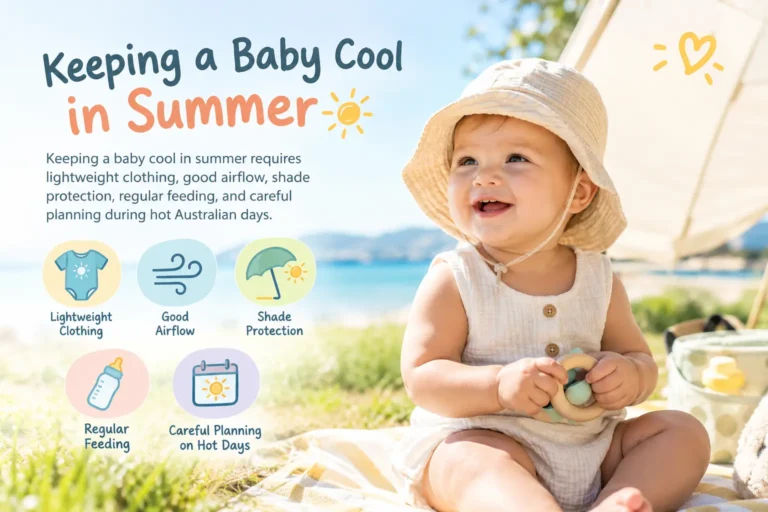
Heat builds fast on a toddler. Offer water every 15 to 20 minutes, and watch for flushed skin or unusual tiredness. Our guide on how to keep a baby cool in summer covers overheating signs in more detail. For sun-safety rules, see Cancer Council’s sun protection advice.
What are the Beach Activities for Toddlers?
The best toddler beach games are short, physical and need almost no rules: bucket relay, shell scavenger hunt, “chase the wave”, sandcastle knock-down and bubble chasing. Toddlers do not follow complex rules, so each game needs one clear action. Say the action out loud, then demonstrate it once.
| Game | Best age | Skill built | What you need | Setup time |
|---|---|---|---|---|
| Bucket relay | 18–36 months | Gross motor, counting | 2 buckets | 1 minute |
| Shell scavenger hunt | 24–36 months | Colour and shape naming | A small tub | 2 minutes |
| Chase the wave | 12–36 months | Balance, running | Nothing | 0 minutes |
| Sandcastle knock-down | 12–36 months | Cause and effect | Mould, small spade | 3 minutes |
| Bubble chasing | 12–30 months | Tracking, reaching | Bubble wand | 1 minute |
| Sink or float | 24–36 months | Early science | Shells, pebbles, a tub | 2 minutes |
For example, in “chase the wave” your toddler runs toward the foam, then runs back as it returns. Always stand between your toddler and deeper water.
What sand play ideas work for toddlers?
Sand play works for toddlers because it offers texture, resistance and endless pouring. Good sand play ideas include digging with a spade, filling and tipping buckets, burying toys, driving trucks through tracks and pressing hands and feet into wet sand. Each idea builds fine motor control and hand strength.
Surface matters. Dry sand pours easily, so it suits scooping and sieving. Wet sand holds its shape, so it suits moulding, tunnels and footprints. Therefore, set up near the damp line, but well above the reach of the waves.
Try these four setups:
- Treasure dig: bury three plastic animals, then give your toddler a spade.
- Truck road: draw a track with your finger and drive a toy digger along it.
- Water painting: brush a large paintbrush dipped in a water pot over flat wet sand.
- Mould parade: press five moulds in a row, then knock them down together.
Watch for sand eating, which is common at this age. Wipe hands and mouths gently, and keep sand away from eyes.
Is it safe for toddlers to play in the water at the beach?
Water play is safe for toddlers only in calm, ankle-to-knee-deep water, with an adult holding or standing within arm’s reach. Toddlers lack the balance and strength to recover from a small wave. Moreover, cold water chills small bodies quickly, so keep dips short.
Pick the right spot. A shallow rock pool, a calm lagoon or the gentle edge of a patrolled beach works better than open surf. Avoid shorebreak, strong currents and any area with rips or sudden drop-offs. Meanwhile, avoid inflatable toys as safety devices, because they can deflate or drift away.
Practical limits:
- Keep each water session to 10 or 15 minutes.
- Leave the water if your toddler shivers or turns blue around the lips.
- Dress your toddler in a swim nappy if they are not toilet trained.
- Check local notices for jellyfish and other marine hazards, which vary by region.
Floatation devices do not replace supervision. The CDC also stresses close adult supervision for young children around water.
What should you pack for a beach day with a toddler?
Pack sun protection, water, snacks, a change of clothes, a first aid kit and five play items. Overpacking slows you down, but underpacking ruins the day. A simple checklist solves both problems.
Beach-day checklist:
- UV-rated beach tent or umbrella
- Sunscreen (SPF 30+), hat, rash vest, sunglasses
- Two water bottles and a toddler cup
- Snacks that resist sand: fruit pieces, cheese cubes, rice cakes
- Towels (one for the toddler, one for sitting)
- Spare clothes, swim nappies and a wet bag
- Wipes, plasters and a small first aid kit
- Foam mat to separate play from hot sand
- Five toys: bucket, spade, moulds, a sieve, a soft ball
Furthermore, pack a “calm-down” item such as a favourite book or a soft toy for the drive home. For more age-matched play gear, see our guide to the best toddler toys.
How do you plan a beach day with a toddler step by step?
You plan a beach day by working backwards from nap time and keeping the visit short. A realistic first trip lasts 60 to 90 minutes. Toddlers tire quickly in sun, wind and sand, so a short, happy visit beats a long, stressful one.
- Choose the time. Aim for mid-morning or late afternoon, outside your toddler’s nap window.
- Check conditions. Review the UV index, tide, wind and any beach warnings.
- Apply sunscreen at home. Do it 20 minutes before you leave.
- Set up shade first. Pitch the tent, then lay the mat.
- Begin with sand play. Let your toddler settle for 20 minutes.
- Add water play. Visit the water’s edge for 10 to 15 minutes with full supervision.
- Offer a snack and water. Do this before your toddler asks.
- Finish with one game. Bubbles or “chase the wave” ends the visit on a high.
- Rinse and reapply. Wash off sand, then re-dress in dry clothes.
- Leave early. Pack up while your toddler is still happy.
What beach toys are worth buying for toddlers?
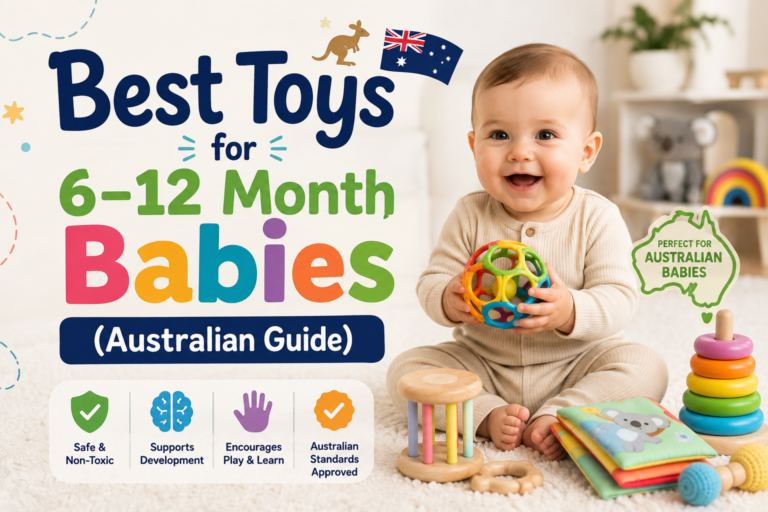
The Beach Activities for Toddlers toys worth buying are a sturdy bucket, a short-handled spade, two or three moulds, a sieve and a soft ball. Buy few and buy simple. Open-ended toys get used for the whole summer, while novelty toys get ignored by the second visit.
Pros of simple beach toys
- They cost little and rinse clean easily.
- They suit several ages.
- They encourage imagination.
Cons to consider
- Sand wears down cheap plastic quickly.
- Sharp edges on cheap spades can scratch skin.
- Small parts become choking hazards.
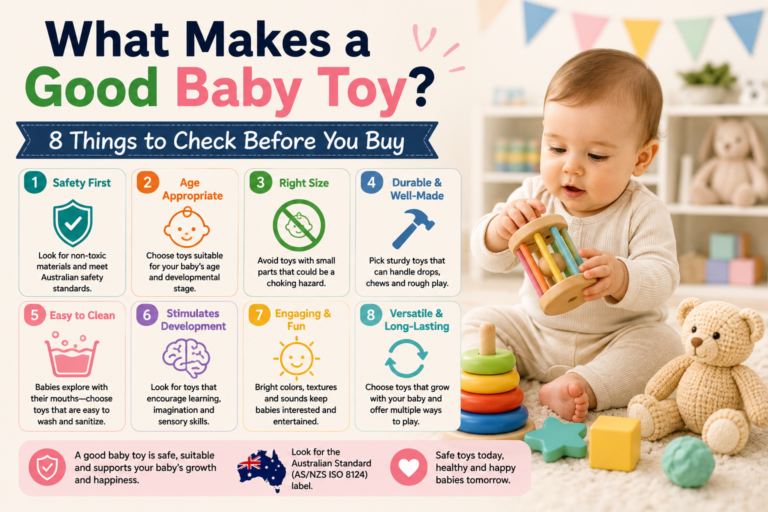
Check every toy for small detachable parts, and choose toys without sharp edges. Look for chunky handles that a small hand can grip. Our sensory toys guide explains why textured, open-ended play suits toddlers, while our list of best toys for 1 year olds helps you choose for younger toddlers. Likewise, our first birthday gift ideas include several beach-ready picks.
What suits a toddler at each age?
At 12 to 18 months, toddlers enjoy sensory sand and short splashing. they add digging, pouring and simple games. At 30 to 36 months, they can follow two-step instructions, join hunts and play alongside other children.
| Age | Best activities | Session length | Watch for |
|---|---|---|---|
| 12–18 months | Sand touching, bucket filling, bubbles | 45–60 minutes | Sand eating, hot sand |
| 18–30 months | Digging, shell hunt, chase the wave | 60–90 minutes | Wandering toward water |
| 30–36 months | Bucket relay, sink or float, castle building | 90–120 minutes | Overconfidence in water |
Developmental timing varies between children, so treat these ranges as guides. For wider age context, see the Baby Toys by Age category.
Who should skip the beach with a toddler?
Skip the beach on days with high UV, strong winds, rough surf or heavy heat, and whenever you cannot supervise closely. This guide does not suit toddlers with medical conditions that affect heat tolerance or skin sensitivity. Ask your child’s doctor first in those cases.
Also postpone the trip if you are alone with several young children and no safe way to watch water. A backyard paddling pool or a sensory bin offers a safer substitute. Furthermore, a lake or river beach brings different risks, such as cold water and uneven depth, so adjust your plan.
Frequently Asked Questions
What are good beach activities for a 1-year-old?
Sand touching, bucket filling, bubble chasing and ankle-deep splashing suit a 1-year-old. Keep sessions to 45 to 60 minutes, stay within arm’s reach near water and use shade for most of the visit.
What are best Beach Activities for Toddlers?
Bucket relay, chase the wave, shell scavenger hunt and sandcastle knock-down are easy toddler beach games. Each needs one action, minimal gear and under three minutes of setup.
How long can a toddler stay at the beach?
A toddler can usually stay 60 to 90 minutes on a first visit. Older toddlers may manage up to two hours. End the visit early if your child becomes tired, hot or cranky.
What sunscreen is best for toddlers at the beach?
Choose broad-spectrum, water-resistant sunscreen with SPF 30 or higher. Reapply every two hours and after swimming, and pair it with a hat and UPF clothing.
Can toddlers swim in the ocean?
Toddlers can paddle in calm, shallow water with an adult within arm’s reach. Avoid surf and strong currents. Always follow local lifeguard advice.
What beach toys do toddlers need?
A bucket, short spade, moulds, a sieve and a soft ball cover most play. Fewer, sturdier toys work better than a large set.
How do I stop my toddler eating sand?
Redirect with a new task, offer a snack in a clean spot and wipe hands often. Sand eating usually fades as toddlers learn new play skills.
Conclusion
Beach activities for toddlers work best when you keep them simple, short and closely supervised. Sand digging, bucket play, shell hunts and shallow splashing give your child plenty of fun without much gear.
Safety, however, comes first. Stay within arm’s reach near water, set up shade before anything else and combine sunscreen, a hat and UPF clothing. Then plan a 60 to 90 minute visit, and leave while your toddler is still happy.
Next, choose a few sturdy toys instead of a full bag. Our best toddler toys guide and baby toys by age guide can help. Finally, pack the checklist above, and enjoy your next beach day.