Toys for Car Trips With Baby: Safe Ideas for Australian Families
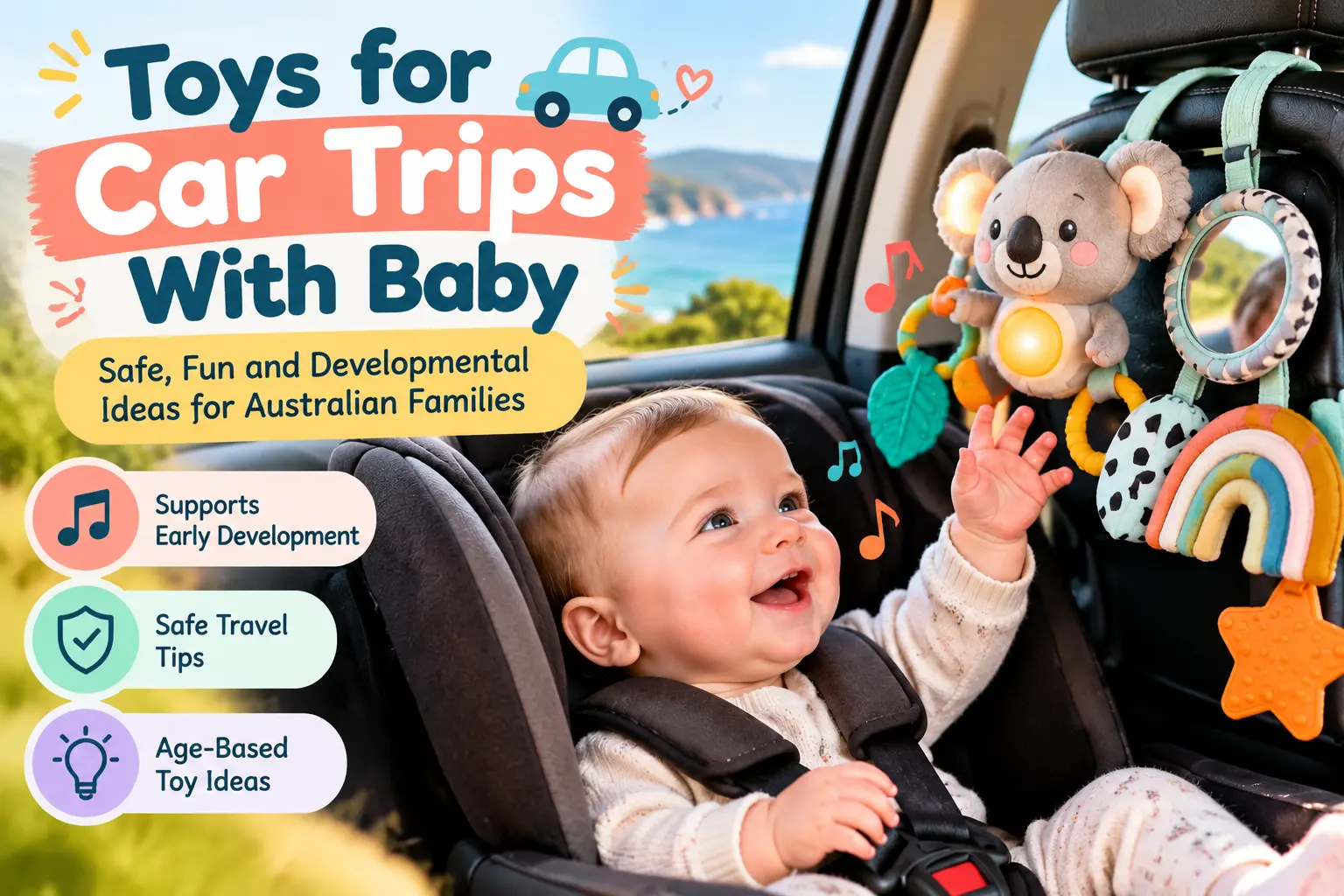
The best toys for car trips with baby are lightweight, easy to clean, age-appropriate toys that offer simple visual, tactile or auditory stimulation. Soft books, textured teethers, lightweight rattles and familiar songs can help babies stay engaged during a journey, provided parents use them in ways that do not interfere with the car seat or safe driving.
Australian parents can build a small travel kit around their baby’s age, interests and tolerance for stimulation. This guide explains which baby travel toys to consider, how musical toys support early learning, what to pack for longer drives and which safety checks matter most.
Key Takeaways
- Soft books, lightweight rattles and textured toys offer different forms of stimulation for babies at suitable developmental stages.
- Musical toys for baby development can introduce rhythm, familiar sounds and opportunities for interaction.
- Babies younger than three months usually benefit more from a parent’s voice and calm music than from complicated electronic toys.
- Never attach unapproved toys, straps or accessories to a car seat or harness.
- Loose toys can become dangerous projectiles during sudden braking or a crash, so store unused items securely.
- Regular breaks, a comfortable car environment and an appropriate child restraint matter more than keeping a baby occupied with toys alone.
What Are the Best Toys for Car Trips With Baby?
The best toys for car trips with baby are simple items that suit your child’s developmental stage and can be stored safely when not in use. Choose a small selection rather than filling the car with toys. A familiar soft book, a lightweight rattle and a suitable teether may offer enough variety for a short journey.
Parents should also remember that a toy suitable for floor play is not automatically suitable for use in a moving car. Keep the child’s restraint correctly fitted and follow its manufacturer’s instructions.
Which travel toys are worth considering?
| Baby travel toy | Main benefit | Best use |
|---|---|---|
| Soft fabric book | Introduces textures and pictures | Supervised play when safely stopped |
| Lightweight rattle | Provides gentle auditory feedback | Age-appropriate supervised play |
| Textured teether | Offers a safe surface to explore by mouth | When suitable for the baby’s age |
| Crinkle book | Combines sound and touch | Short, supervised play sessions |
| Soft sensory toy | Introduces different textures | Calm interaction outside the moving vehicle |
| Familiar songs | Encourages listening and interaction | Played at a comfortable volume |
| Parent’s voice | Supports bonding and early communication | Talking or singing during the journey |
These are options to consider, not a guarantee that every baby will enjoy them. Some babies prefer familiar voices, while others become unsettled by additional sounds or visual activity.
For more age-specific guidance, read LuxeBabyToys.com’s guide to toys for babies aged 3–6 months.
Which Baby Travel Toys Are Best for Each Age?
The right baby travel toys depend on what your child can see, hear, grasp and explore safely. Newborns usually benefit from calm interaction, babies aged 3–6 months begin practising reaching and grasping, and older babies often enjoy simple cause-and-effect activities.
Age recommendations on toy packaging are a useful starting point, but parents should also consider individual development, mouthing behaviour and the manufacturer’s instructions.
Newborns: Birth to 3 Months
Newborns need very little equipment for an enjoyable journey. A familiar voice, gentle singing and quiet surroundings can provide stimulation without overwhelming a young baby.
Consider these options:
- Familiar songs: Sing softly or play calm music at a comfortable volume.
- High-contrast pictures: Use suitable visual cards during a break rather than attaching them to the restraint.
- Soft rattles: Keep these for supervised play when the baby can safely interact with them.
- Face-to-face interaction: Talk to your baby when another adult can safely provide attention, or during a stop.
Newborns cannot reliably grasp and control toys. Avoid placing loose items where they could obstruct the baby’s face or breathing.
LuxeBabyToys.com’s guide to playing with a newborn explains how simple activities, gentle sounds and short interactions suit this early stage.
Babies Aged 3–6 Months
Babies in this age group often begin reaching for objects, holding lightweight toys and exploring textures with their mouths. Choose toys that are easy to clean and have no detachable small parts.
Useful options include lightweight rattles, soft fabric books and appropriately designed teethers. Textured toys can give babies different surfaces to explore, while gentle sounds introduce opportunities to notice how movement and noise relate.
Avoid heavy wooden toys, toys with glued-on decorations and products that have damaged seams or loose components. These risks matter particularly when babies begin mouthing everything they can reach.
See the full Australian guide to toys for babies aged 3–6 months for more information about choosing and cleaning suitable toys.
Babies Aged 6–12 Months
Older babies may show more interest in sounds, familiar pictures, grasping and releasing objects. A soft book or a lightweight toy designed for their developmental stage can provide variety during travel breaks.
You can also sing familiar songs, repeat simple sounds or name objects when your baby is alert and receptive. These activities encourage interaction without requiring complicated toys.
Choose toys that remain intact under mouthing and follow all age recommendations. Small toy vehicles, loose beads, detachable decorations and other choking hazards do not belong in a baby’s travel kit.
How Do Musical Toys for Baby Development Help?
Musical toys for baby development introduce babies to sound, rhythm, repetition and cause-and-effect experiences. A rattle that makes a gentle sound when moved can help a baby notice the connection between an action and its result, while familiar songs provide opportunities for listening and interaction.
Music is not a replacement for responsive interaction with a caregiver. The benefit comes from the experience: listening, noticing, responding and sharing attention with someone familiar.
What types of musical toys should parents consider?
Soft rattles: These can introduce simple sounds when babies begin to grasp objects. Choose a lightweight, age-appropriate design with securely attached components.
Gentle sound toys: Some toys produce music or sounds when a baby presses a button. These may be more suitable for supervised play during a stop than for use inside a moving vehicle.
Familiar music: A parent’s singing or quietly played children’s songs can create a familiar listening experience without adding another loose object to the car.
Cause-and-effect toys: Age-appropriate toys that respond to a baby’s movement or touch can introduce early cause-and-effect learning during supervised play outside the car.
How can parents use music without overstimulating a baby?
Start with a familiar song or gentle sound at a low volume. Watch your baby’s response rather than assuming more music will always help.
Turning away, fussing, stiffening or becoming increasingly unsettled can indicate that your baby needs less stimulation. Pause the music and allow some quiet time.
Do not place a speaker or sound-producing toy close to the baby’s ears. Avoid loud, continuous music, especially in a confined vehicle.
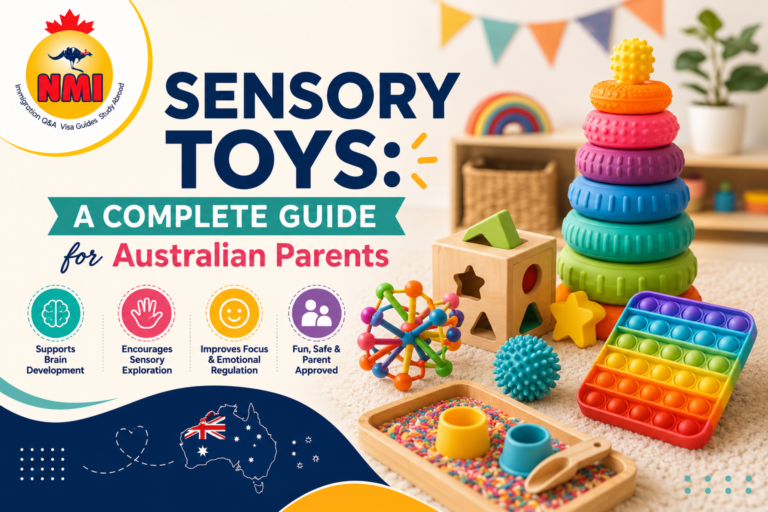
For a wider look at sensory play and sound-based experiences, visit the complete sensory toys guide for Australian parents.
How Can You Keep a Baby Entertained in the Car?
Keeping baby entertained in car journeys works best when parents combine simple activities, familiar sounds and regular opportunities for rest. Toys can help, but a baby may still need feeding, a nappy change, comfort or a break from sitting in the restraint.
The Australian parenting resource Raising Children Network recommends familiar music, stories and safe distractions while emphasising that loose objects should be stored securely.
Try these practical approaches.
1. Play familiar music
Choose a few familiar songs instead of changing tracks constantly. A recognisable melody can provide continuity, while quieter periods give your baby a break from sound.
If another adult is travelling with you, they can sing or interact with the baby when appropriate. The driver should keep their attention on the road.
2. Rotate a small selection of toys
Pack two or three suitable toys rather than presenting everything at once. Rotate the options during safe stops and put away anything that is no longer needed.
This approach also makes it easier to keep track of loose objects.
3. Use books during breaks
Soft or fabric books are useful for supervised play when the vehicle is parked and the baby can be taken out of the restraint as appropriate. Point to pictures, name objects and make gentle sounds.
Books are not a reason to loosen the harness or position an object between the baby and the restraint.
4. Respond to your baby’s cues
A quiet baby may be content to listen and observe. A restless baby may need a pause rather than another toy.
Check whether your baby seems hungry, uncomfortable, too warm or tired. Do not assume every cry signals boredom.
5. Plan regular stops
For longer journeys, allow time to stop, check your baby and attend to feeding and nappy changes. Remove the baby from the car seat during appropriate breaks, even if they have fallen asleep, and transfer them to a suitable safe sleeping environment when possible.
Australian government guidance discusses regular breaks and safe child restraints in its advice on car travel with babies and children.
Are Toys Safe to Use Inside a Moving Car?
Toys can be part of a baby’s travel routine, but car-seat safety must come before entertainment. A toy that seems soft or harmless can still interfere with a harness, obstruct breathing or become a projectile during sudden braking.
The Australian Competition and Consumer Commission (ACCC) explains that child restraints must meet applicable mandatory requirements and be used according to their instructions. It also warns that accessories can affect restraint safety.
What should parents avoid?
- Unapproved attachments: Do not attach toys, straps or accessories to a restraint unless the manufacturer specifically permits them.
- Long cords and ribbons: These can create entanglement or strangulation risks.
- Small detachable parts: Babies can choke on components that come loose.
- Hard or heavy objects: These can cause injuries if thrown forward during a collision.
- Objects near the face: Toys must not obstruct the nose, mouth or airway.
- Loose items within the cabin: Store unused toys securely in a bag or suitable compartment.
A toy’s softness does not automatically make it safe during a collision. Keep the restraint and harness clear, and follow the instructions for your specific seat.
Can you attach toys to a baby car seat?
Only use attachments specifically permitted by the car-seat manufacturer. Avoid improvising with universal straps, clips, mirrors or toy bars, even if they appear secure.
A toy attached to a handle or bar may change how the restraint performs in a crash. Check the restraint manual before using any accessory.
For official guidance, read the ACCC’s car seats guide.
How Do You Choose Safe Baby Travel Toys in Australia?
Australian parents should check the toy’s recommended age, construction, small-part risks, condition and cleaning instructions before packing it. Toys intended for children aged up to and including 36 months are covered by mandatory safety requirements designed to reduce risks such as small parts detaching.
Product labels and age guidance matter, but they do not replace inspection. A previously safe toy may become unsuitable if it cracks, tears or develops loose parts.
Use this five-step toy safety check
- Check the age label. Confirm that the toy is suitable for your baby’s age and abilities.
- Inspect the construction. Look for secure seams, intact surfaces and firmly attached components.
- Check for choking risks. Avoid small parts and toys that can break into pieces.
- Review the attachment design. Do not use cords, clips or straps that could create entanglement or interfere with the restraint.
- Clean and inspect regularly. Follow the manufacturer’s care instructions and replace damaged toys.
The ACCC’s Kids’ toys guide explains toy hazards and Australian product safety requirements. Check Product Safety Australia’s recall information if you have concerns about a particular item.
What Should You Pack for a Long Car Trip With a Baby?
A practical travel kit contains a small number of suitable toys alongside feeding supplies, nappies, spare clothing and other essentials. The contents should reflect the baby’s age, journey length, weather and individual needs.
You do not need a large toy collection. The aim is to have a few useful options available at safe stops without creating clutter in the vehicle.
Baby road-trip packing checklist
- One lightweight, age-appropriate toy for supervised play.
- One washable soft or fabric book.
- A suitable teether if your baby uses one.
- A familiar music playlist or a few songs you can sing.
- Spare nappies and wipes.
- Spare clothing and a suitable change mat.
- Feeding supplies appropriate for your baby.
- Water for adults and older children, as needed.
- A secure bag or compartment for storing unused toys.
- The instructions for your child’s restraint, if you need to check its use or permitted accessories.
Keep feeding and care supplies accessible to the adult passenger, not scattered around the vehicle. Do not feed a baby while driving or leave the driver distracted by trying to retrieve toys.
How many toys do you really need?
Start with two or three options and adjust based on your baby’s age and preferences. A newborn may be perfectly content with familiar sounds, while an older baby may enjoy a soft book and a suitable grasping toy during breaks.
Packing more items does not guarantee a calmer journey. A smaller kit is easier to manage, clean and secure.
How Can You Keep Your Baby Comfortable During an Australian Road Trip?
Comfort matters as much as entertainment, particularly during Australia’s warmer months. A baby who is hot, tired or uncomfortable may remain unsettled even when several toys are available.
Before leaving, cool the vehicle, dress your baby in suitable clothing and check the temperature of the restraint and other surfaces. Use the vehicle’s air conditioning where available, and make regular stops on longer journeys.
Never leave a baby unattended in a parked car, even for a short time. Avoid covering a baby capsule with a towel or blanket in a way that restricts airflow.
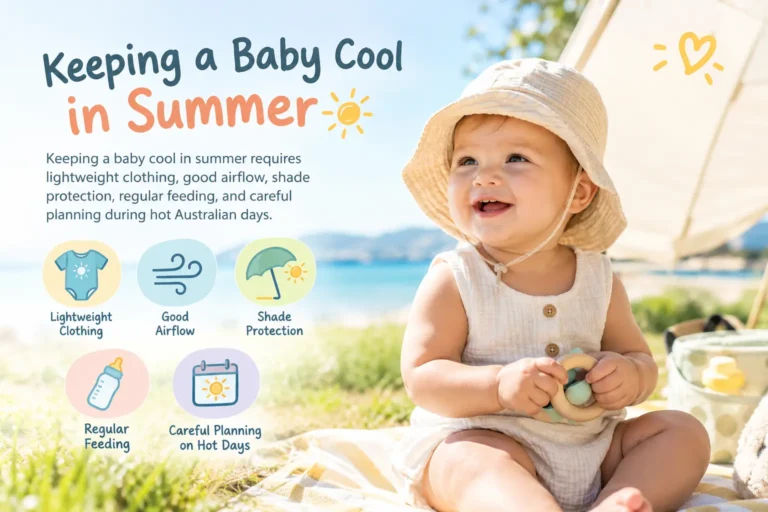
The Raising Children Network’s car comfort guide explains how to manage heat, plan breaks and reduce boredom. You can also read LuxeBabyToys.com’s practical guide to keeping a baby cool in summer for additional Australian weather advice.
Which Baby Travel Toys Should You Avoid?
Avoid toys that are too small, heavy, fragile, noisy or difficult to clean, as well as anything that interferes with the child’s restraint. Electronic features do not automatically make a toy more educational or suitable for travel.
| Toy or feature | Main concern | Better approach |
|---|---|---|
| Toys with loose beads | Choking risk | Choose securely constructed toys without detachable parts |
| Long ribbons or cords | Entanglement or strangulation | Select designs without hazardous cords |
| Heavy wooden toys | Impact injury risk | Keep these for appropriate supervised play outside the moving car |
| Loud musical toys | Noise and overstimulation | Use gentle music at a comfortable volume |
| Damaged plastic toys | Broken or sharp components | Inspect regularly and replace damaged items |
| Unapproved seat attachments | Possible interference with restraint safety | Follow the seat manufacturer’s instructions |
| Complicated toys with tiny buttons | Small-part or battery-access risks | Choose suitable, securely enclosed designs |
Battery-operated toys deserve particular attention. Button batteries can cause severe internal injuries if swallowed. Never use a toy with a loose or accessible battery compartment, and keep spare batteries out of children’s reach. If a child may have swallowed a button battery, seek emergency medical help immediately.
How Can You Make a Simple Car-Trip Activity Plan?
A flexible plan gives parents a starting point without expecting babies to remain occupied for a set period. Match each activity to your child’s age, alertness and needs, and stop when your baby becomes uncomfortable.
Use this simple routine:
- Before departure: Check the restraint, pack supplies and make sure all loose items are secured.
- At the beginning of the trip: Settle your baby comfortably and use familiar, gentle music if they enjoy it.
- During the drive: Keep the cabin calm and let the driver focus on driving. Do not reach back to pass toys while the car is moving.
- At a safe stop: Check your baby, change or feed them as needed, and offer suitable supervised play outside the restraint.
- Before setting off again: Put toys away, refasten the harness according to the seat instructions and confirm that the baby is positioned correctly.
This routine can be adapted to a short drive to the shops or a longer family trip. It is a guide, not a fixed schedule. A baby’s feeding, sleep and comfort needs take priority.
Frequently Asked Questions About Toys for Car Trips With Baby
What are the best toys for car trips with baby?
Lightweight rattles, soft books and suitable textured toys are useful options for supervised play, particularly during stops. Familiar songs and gentle conversation can provide stimulation without adding loose objects to the vehicle. Always choose toys that suit your baby’s age and keep the child restraint clear.
Are musical toys good for baby development?
Musical toys can introduce rhythm, sound and cause-and-effect experiences. A baby may notice that moving a rattle produces a sound or respond to a familiar melody. Choose age-appropriate toys and moderate the volume. Music supports interaction but does not replace talking, singing and responsive play with a caregiver.
How do I keep my baby entertained in the car without screens?
Try familiar songs, gentle conversation and a calm cabin environment. Pack a few suitable toys for supervised play during stops, and allow quiet periods when your baby needs rest. Babies do not need constant entertainment, and a screen-free journey can still offer plenty of opportunities for interaction.
Can a baby play with toys while sitting in a car seat?
Do not assume a toy is safe simply because it fits inside the car seat. Follow the restraint manufacturer’s instructions, avoid unapproved attachments and keep objects away from the harness and baby’s airway. Store unused toys securely. When in doubt, reserve hands-on toy play for a safe stop.
How many baby travel toys should I pack?
Two or three carefully selected options are a practical starting point. Choose items that suit your baby’s developmental stage, are easy to clean and can be stored securely. Familiar music and your voice may provide enough variety without packing extra equipment.
What are the safest musical toys for babies?
Look for toys that match the baby’s age, have secure components and do not expose small parts or batteries. Choose comfortable sound levels and avoid toys with long cords or unapproved car-seat attachments. A parent’s voice or softly played music is also a useful alternative.
Should I stop the car if my baby starts crying?
If your baby is crying persistently or appears uncomfortable, find a safe place to stop as soon as it is practical. Check for hunger, a wet nappy, overheating or another need. Never try to adjust the harness or retrieve a toy while driving.
How often should I take breaks on a long drive with a baby?
Plan regular stops and allow extra time for feeding, nappy changes and comfort checks. There is no single break interval that suits every baby or every journey. Follow your child’s needs, check their breathing and positioning, and avoid leaving a baby in a car seat for unnecessarily long periods.
Help Your Baby Enjoy the Journey Safely
The best toys for car trips with baby are not necessarily the most expensive or elaborate. A few age-appropriate items, familiar songs and a calm travel routine can provide variety without filling the vehicle with distractions.
Musical toys for baby development can support listening, sound exploration and early cause-and-effect experiences. Parents should choose suitable products, avoid unapproved restraint attachments and store loose objects securely. Regular breaks and a comfortable environment remain essential.
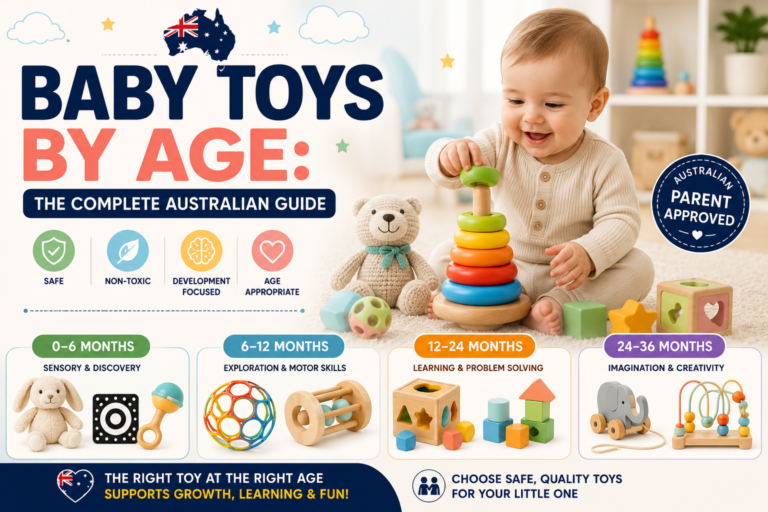
For more ideas, explore the baby toys by age guide and the sensory toys guide to find options suited to your child’s current stage.