Best Toys for 2 Year Olds in Australia
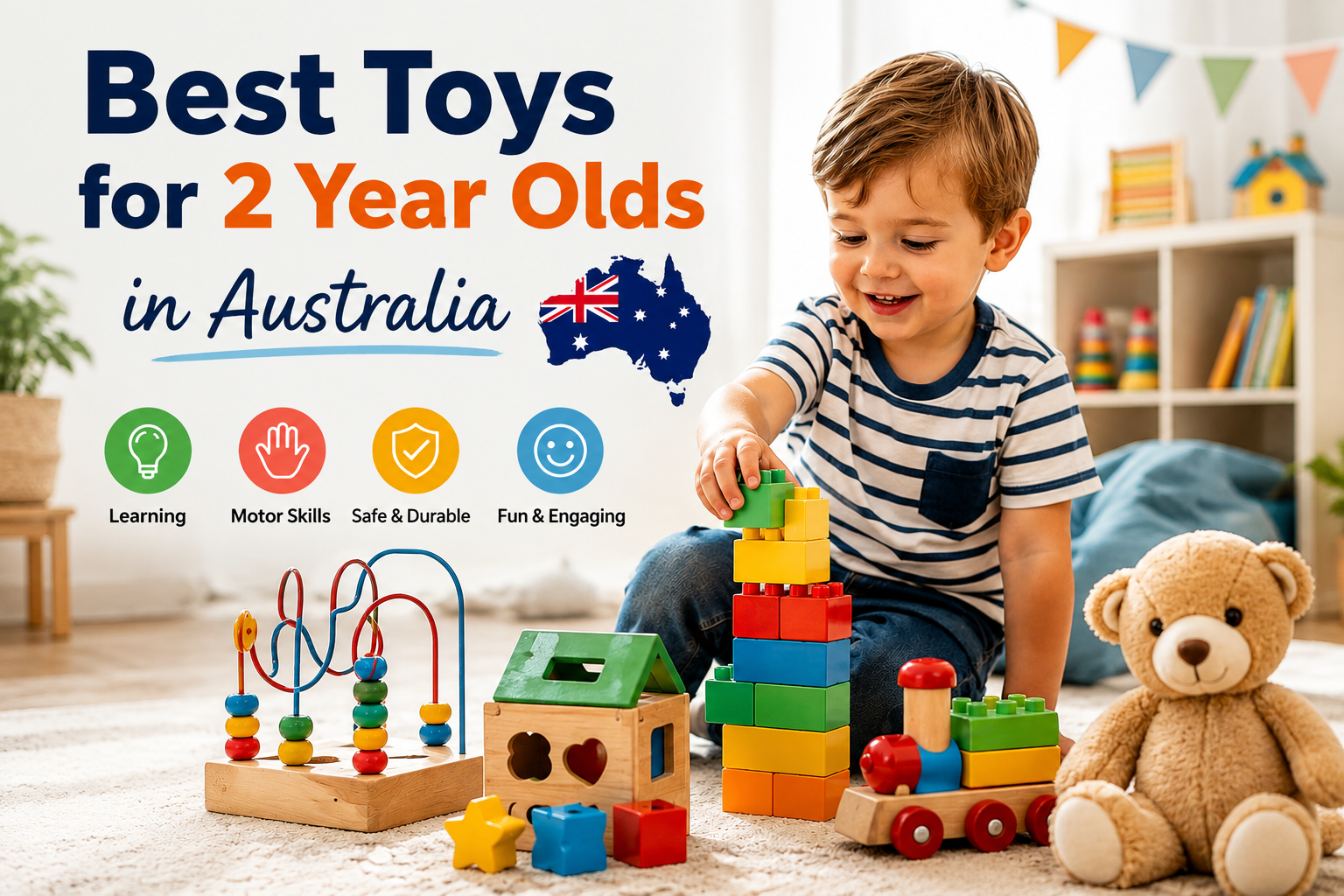
Quick answer: Two year olds are in the middle of a pretend play and language explosion, and they play alongside other children rather than with them. The best toys for this age are open-ended: magnetic tiles, block sets, a play kitchen, chunky puzzles, playdough and ride-ons. Budget $30–$150 per item in Australia, and prioritise toys that can be used in more than one way.
Key takeaways
- Open-ended beats closed-ended at two. A toy with one correct outcome gets solved and abandoned. A toy with no correct outcome gets played with for years.
- Two year olds do not share, and that is developmentally normal. Parallel play means turn-taking games are still too early.
- The cost-per-year maths is worth doing. A $120 play kitchen used for four years costs less per year than a $40 toy used for three months.
- Language is exploding right now. Pretend play does more for vocabulary than any toy marketed as educational.
- Choking risk does not end until three. Small parts still matter, and this is the age when older siblings’ toys start appearing on the floor.
Two is the age where toy buying gets both easier and more expensive. Easier because your child now has clear preferences and will tell you about them. More expensive because the toys that genuinely suit this stage kitchens, block sets, ride-ons cost real money.
The good news is that the right purchases at two last until school age. This guide covers what a two year old is actually doing, which toys match, and a simple framework for working out whether something is worth its price. It sits inside our wider baby toys by age guide.
What a two year old is actually doing
Four things define this stage.
Pretend play takes over. By two, a block is no longer a block. It is a phone, a car, a piece of toast, a boat. This is symbolic thinking, and it is the single most important cognitive development of the toddler years. Toys that support it anything that can stand in for something else punch far above their weight.
Language explodes. Vocabulary typically expands dramatically between two and three, and two-word phrases become sentences. The range is genuinely wide, and late talking is common and usually unremarkable. Pretend play and shared reading both feed this directly; electronic toys that talk at a child do not.
Play is parallel, not cooperative. Two year olds sit beside each other, doing similar things, largely ignoring one another. They are not being antisocial cooperative play with shared rules does not properly arrive until around three or four. This has a practical implication most gift guides miss: board games and turn-taking toys are too early.
Autonomy arrives, loudly. “I do it” becomes the theme of the year, along with the frustration that follows when they cannot. Toys that a child can operate independently, without an adult setting them up, are worth far more than ones that need help.
Physically, most two year olds run, climb, kick a ball, and are starting to jump with both feet. Fine motor control is good enough for threading large beads, chunky crayons and playdough.
The six toys worth buying at two
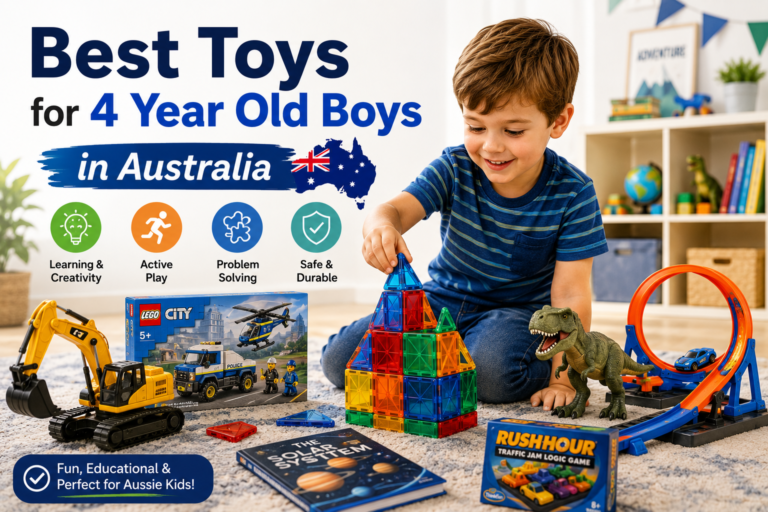
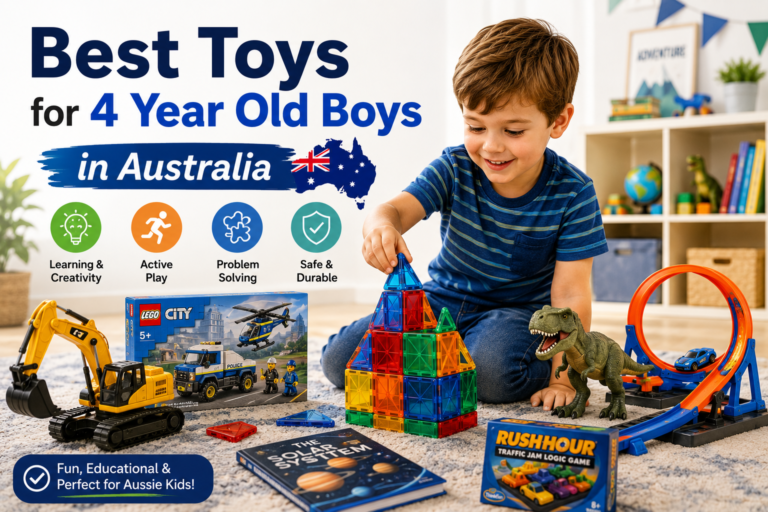
1. Magnetic tiles
The most expensive item on this list and the one with the best long-term return. Flat tiles that click together into anything houses, ramps, garages, towers.
They suit a two year old (stacking flat, making simple squares) and a six year old (elaborate structures), which is unusual. Expect four to five years of use.
Safety note: buy a reputable brand where magnets are fully sealed inside the tile. Cheap sets can crack and release small high-powered magnets, which are genuinely dangerous if more than one is swallowed. Inspect for cracks regularly and bin damaged tiles. See magnets in toys.
AU price: $50–$200 depending on set size.
2. A play kitchen
High upfront cost, exceptional longevity. Most Australian households with a play kitchen report it still being used at five or six.
Check bench height against your child too tall and they cannot reach, too short and they outgrow it in a year. Wooden versions last longer and hold resale value; plastic is cheaper and easier to clean.
You do not need the accessory sets sold alongside it. Real kitchen items a wooden spoon, a plastic bowl, an empty container work just as well and often better.
AU price: $80–$300. Genuinely worth waiting for a sale.
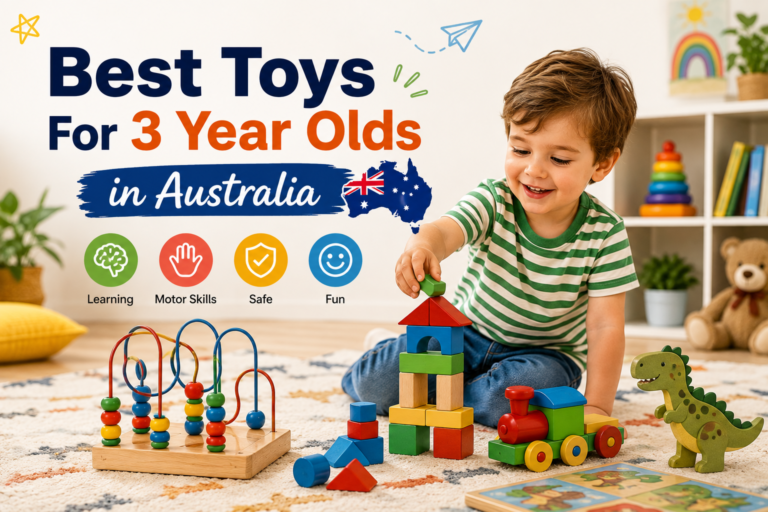
3. Block sets
Wooden unit blocks or large interlocking bricks. Pure open-ended play, no correct answer, and they combine with everything else your child owns.
At two, expect towers and knocking down. Actual construction comes closer to three.
AU price: $30–$120.
4. Chunky puzzles 4 to 12 pieces
Graduate from knob puzzles to simple jigsaws in this window. Start at four to six pieces and move up only when your child completes them easily.
Wooden with a tray backing is more forgiving than cardboard, which bends and gets chewed.
AU price: $15–$35.
5. Playdough and first craft
Fine motor work disguised as fun. Rolling, squashing and cutting build the hand strength that pencil control depends on years later.
Chunky washable crayons, large paper, and non-toxic dough. Supervised some two year olds still mouth things.
AU price: $10–$40.
6. Ride-ons and gross motor toys
Two year olds need to move, and Australian backyards and parks make this easy for most of the year.
Feet-on-the-ground ride-ons still suit at two; balance bikes generally work from around two and a half, once your child can walk-run confidently. Check that both feet sit flat on the ground when seated.
AU price: $50–$180.
Open-ended vs closed-ended: the framework worth knowing
This one distinction predicts play value better than age labels, price or brand.
A closed-ended toy has one correct outcome. A shape sorter is solved when the shapes go in. A puzzle is finished when it is complete. Once mastered, interest drops sharply.
An open-ended toy has no correct outcome. Blocks, magnetic tiles, playdough, a play kitchen, dolls, dress-ups. There is nothing to finish, so there is nothing to outgrow.
| Closed-ended | Open-ended | |
| Examples | Shape sorters, puzzles, pop-up toys | Blocks, tiles, playdough, kitchens, dolls |
| Typical interest span | Weeks to months | Years |
| Best used for | Building a specific skill | Everything else |
| Buy them | A few, cheaply | This is where the money goes |
Both have a place closed-ended toys teach specific skills efficiently. But at two, when pretend play is the dominant mode, the open-ended half of the shelf is what gets used. If your child’s toy collection is mostly closed-ended and nothing holds their attention, that is usually the reason.
Cost per year: which toys actually earn their price
The sticker price tells you very little. Divide by years of realistic use instead.
| Toy | AU price | Years used | Cost per year |
| Play kitchen | $150 | 4 | $38 |
| Magnetic tiles | $120 | 5 | $24 |
| Wooden block set | $80 | 5 | $16 |
| Balance bike | $120 | 3 | $40 |
| Chunky puzzle | $25 | 1.5 | $17 |
| Electronic learning tablet | $60 | 0.5 | $120 |
| Character playset with small parts | $50 | 0.5 | $100 |
The pattern is consistent: the cheap toys are usually the expensive ones. A $60 electronic toy abandoned in six months costs more per year of use than a $150 play kitchen that lasts until school.
This is also the argument for buying secondhand on the big items. Play kitchens, ride-ons and block sets appear constantly on Australian marketplace listings, often barely used, at a third of retail.
What to skip at two
| Toy | Why not yet |
| Board games and turn-taking games | Cooperative play develops around three to four. Too early |
| Anything with small parts | Choking risk continues until three |
| Complex jigsaw puzzles (24+ pieces) | Frustration, not challenge build up gradually |
| Electronic learning tablets | Passive, short-lived, and worst cost-per-year on the list |
| Toys requiring adult setup every time | Undermines the autonomy that defines this age |
| Large plush toy collections | Two or three favourites get used; the rest occupy storage |
Parallel play: why turn taking toys do not work yet
Worth expanding, because it explains a lot of frustrating playdates.
Two year olds playing “together” are typically sitting near each other doing parallel, separate things. They will watch each other, copy each other, and take each other’s toys but they are not collaborating, and expecting them to share is expecting a skill they do not yet have.
Practical implications:
- Buy duplicates for playdates, not one toy to share. Two of the same item prevents more conflict than any amount of negotiation.
- Skip board games and cooperative sets for now, however good the reviews.
- Open-ended toys work better in groups than closed-ended ones, because there is no single correct outcome to compete over.
Sharing generally becomes reliable somewhere around three and a half to four, and the toys that support genuine cooperative play are covered in best toys for 3 year olds in Australia.
Safety at two
The main risks shift toward climbing and older siblings’ toys, but the small-parts rule still applies.
- Choking risk continues until age three. The toilet roll test is still the check to run. This is also the age when a bigger sibling’s Lego starts appearing on the floor full method: choking hazards and the small parts test.
- Magnets. Sealed magnetic tiles from reputable brands are fine. Cracked tiles and cheap sets are not inspect regularly. Magnets in toys.
- Anchor furniture and check climbing stability. Two year olds climb everything, including shelving and toy storage units.
- Toy box lids. Heavy hinged lids are a finger and neck hazard. Soft-close or no lid.
- Check playdough and craft supplies are non-toxic and labelled for the age.
Full Australian standards breakdown and printable checklist: baby toy safety in Australia.
What it costs in Australia
| Item | Budget | Mid-range |
| Magnetic tiles | $50 | $200 |
| Play kitchen | $80 | $300 |
| Block set | $30 | $120 |
| Chunky puzzles (2) | $30 | $70 |
| Playdough and craft | $10 | $40 |
| Ride-on or balance bike | $50 | $180 |
| Total | $250 | $910 |
The gap here is wider than at any earlier stage, and it is real timber quality, magnet sealing and joinery all differ meaningfully at this price range. That said, the budget column produces perfectly good play. Kmart, Big W and Target cover it, and secondhand covers the large items better still.
Prices are indicative for 2026 and vary by retailer and sale period.
What comes next
At three, cooperative play, rules and more complex construction arrive. Those toys are covered in best toys for 3 year olds in Australia, and the full twelve-to-thirty-six-month picture is in best toddler toys in Australia.
The eight checks in what makes a good baby toy still apply to every purchase.
Frequently asked questions
What are the best toys for a 2 year old? Open-ended toys: magnetic tiles, block sets, a play kitchen, playdough and chunky puzzles. Two is the peak of pretend play, so toys that can stand in for other things get used most.
How many toys does a 2 year old need? Eight to ten accessible at a time, rotated every two to three weeks. A smaller visible selection reliably produces longer, more focused play than a full toy box.
Do 2 year olds share toys? Generally no, and that is developmentally normal. Two year olds engage in parallel play alongside others rather than with them. Sharing usually becomes reliable around three and a half to four. Buying duplicates for playdates avoids most conflict.
Are magnetic tiles safe for 2 year olds? Yes, from reputable brands where magnets are fully sealed inside each tile. Inspect regularly for cracks and discard damaged tiles, because small high-powered magnets are dangerous if more than one is swallowed.
Are board games too early for a 2 year old? Yes. Turn-taking and rule-following depend on cooperative play, which develops closer to three or four. A two year old will want to move the pieces, not follow the rules.
What should I buy a 2 year old for their birthday in Australia? Something open-ended and large: a play kitchen, magnetic tile set or block set. All three typically last four to five years, which makes them better value than they look at the till.
How we choose the toys we recommend
Every recommendation is assessed against Australian safety standards, developmental fit for the stated age, durability under real use, washability, and value at current Australian retail prices. We prioritise products actually available to buy in Australia. Affiliate links, where used, are disclosed at the top of the article and do not affect ranking.
Sources referenced: Product Safety Australia (ACCC) for mandatory toy standards, magnet and small parts rules; Kidsafe Australia for furniture stability guidance; Raising Children Network for developmental milestone ranges.