Best Toys for Girls by Age: Australian Buying Guide
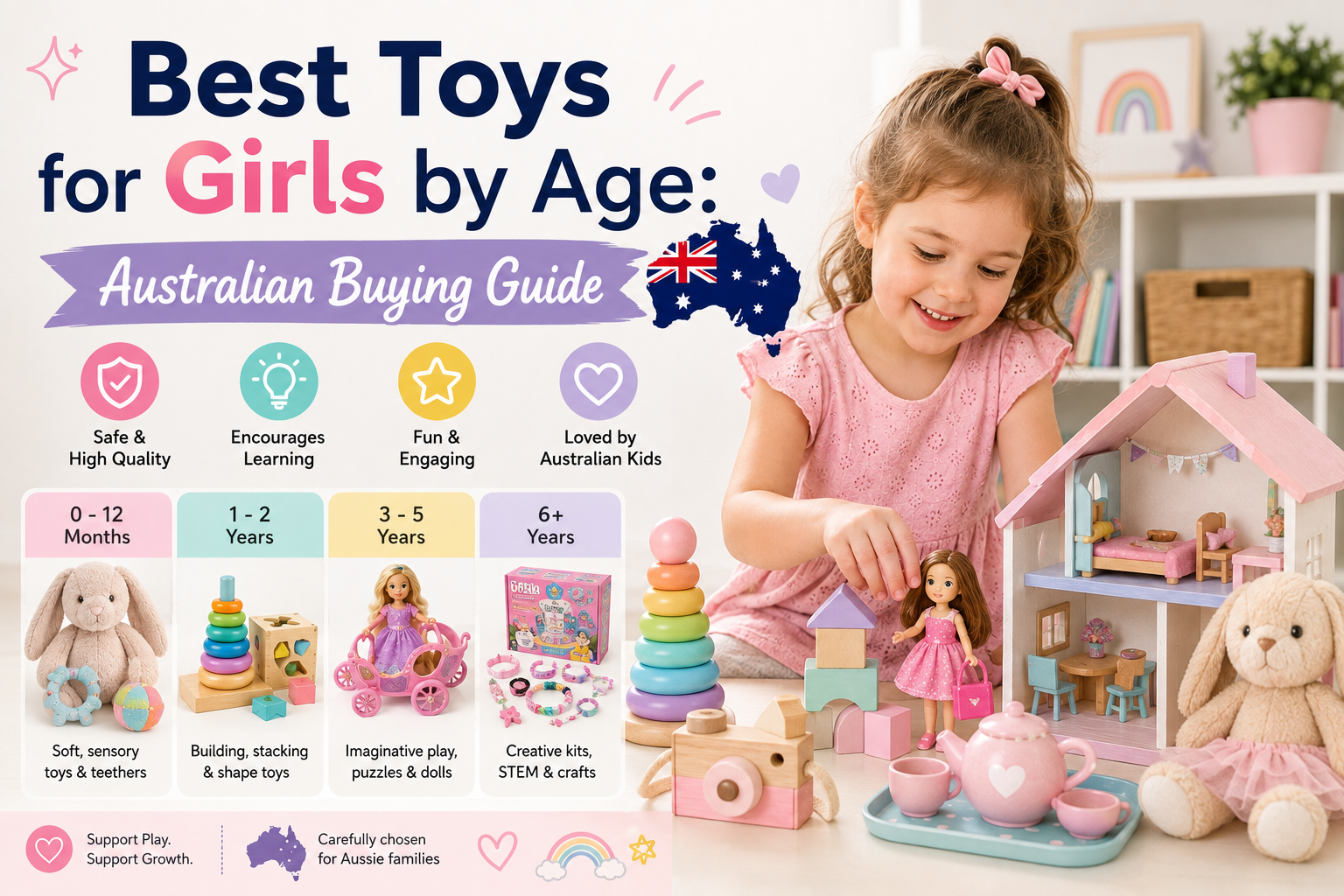
Quick answer: The best toys for girls are the same as the best toys for any child at that age chosen for what she can do and what she is interested in. From babies to preschoolers that means grasping and cause-and-effect toys under one, stacking and pretend play at one to two, open-ended construction and role play at two to three, and bikes, games and craft from three. Budget $20–$180 per item in Australia
Key takeaways
- There is no developmental difference in what boys and girls need from toys. Interests differ by child, not reliably by gender.
- Construction and spatial toys are the category girls are consistently offered less of and spatial reasoning is a trainable skill. This is the single most useful gap to fill.
- Dolls and role play are genuinely valuable. They build narrative, language and perspective-taking. Nothing here argues against them.
- Buy for the interest you have observed, not the category on the shelf. A week of watching beats any list.
- Gift buyers: ask what she is into. The most common gift-buying error is buying the category rather than the child.
If you have searched for toys for girls, you have probably already noticed the problem: the results are mostly the same twenty products in pink, and very little of it tells you whether a given toy actually suits a two year old.
This guide takes a different approach. It covers what suits each age developmentally, which categories are worth adding because girls tend to be offered them less, and how to buy well as a gift-giver who does not know the child that well. It sits inside our wider baby toys by age guide.
Why this is not a list of pink toys
Short version, then we move on.
Children develop identically regardless of gender for the skills toys support: grasping, cause and effect, spatial reasoning, language, fine motor control, narrative play. There is no developmental basis for a separate girls’ toy list.
What is real is that by around age three, most children have absorbed clear ideas about which toys belong to whom from packaging, advertising and what they see other children given. Those preferences are genuine and worth respecting.
So the practical position taken here: follow her actual interests, and make sure the categories she is offered less of are still available to her. That is it. Nothing below argues that dolls are bad or that pink is a problem.
Toys for girls by age
Babies 0–12 months
Nothing gendered applies here at all. Newborns need high-contrast visual toys; from three months, grasping and mouthing toys; from six months, cause and effect.
What to buy: high-contrast cards, a play gym, textured balls, silicone teethers, stacking cups, a ball drop toy, board books.
AU price: $8–$60 per item.
Full detail by stage is in the baby toys by age guide.
1 to 2 years
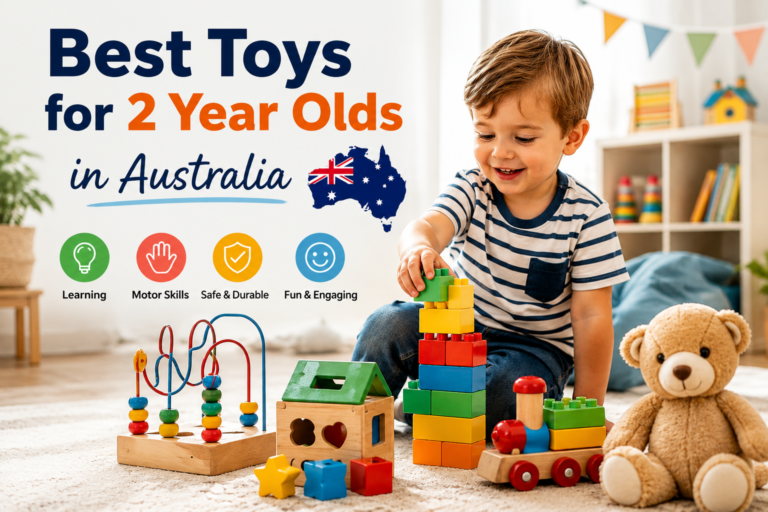
Posting, stacking, walking and the beginning of imitation. Shape sorters with two or three shapes, stacking rings, knob puzzles, a push walker, large blocks, and realistic pretend items like a toy phone or keys.
AU price: $12–$150.
2 to 3 years
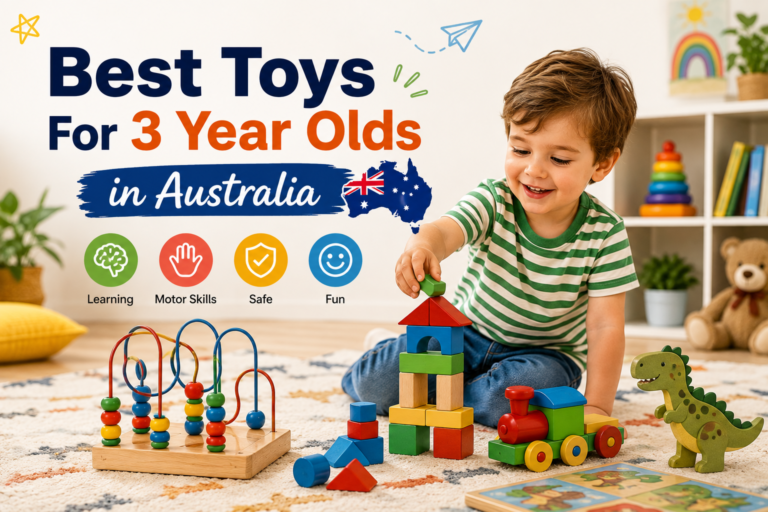
Pretend play takes over, and open-ended toys come into their own. Magnetic tiles, block sets, a play kitchen, chunky puzzles, playdough, ride-ons.
This is the age where the category gap starts to appear. See the next section.
AU price: $15–$200.
3 to 5 years
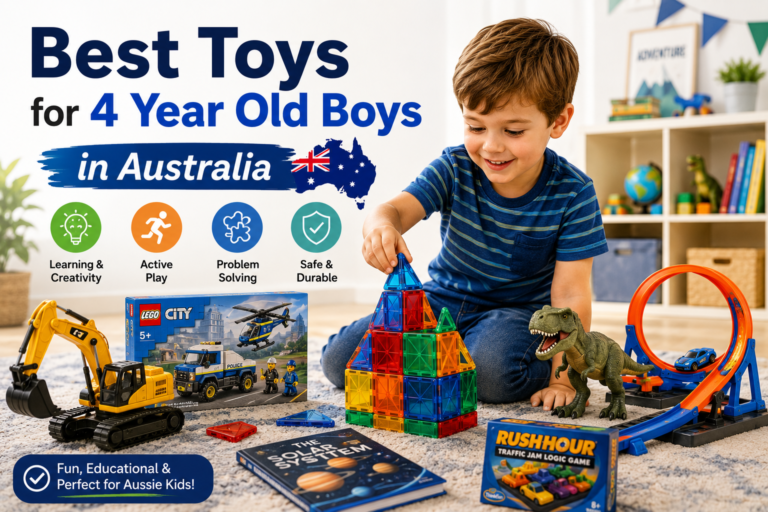
Cooperative play, storytelling, rules and preschool-readiness skills. Dress-ups and role play sets, construction bricks, small-world figures, first board games, a balance bike or scooter, craft supplies and scissors.
AU price: $15–$180.
The categories girls are offered less of
This is the genuinely useful part of this guide, and the reason it exists.
Research on children’s play consistently finds that construction, spatial and building toys are offered to girls less often than to boys in shops, in advertising, and in what relatives buy. The effect compounds: a child who is given fewer building toys builds less, gets less practice, and is then assumed to be less interested.
That matters because spatial reasoning is a trainable skill, not a fixed trait, and it underpins a lot of later maths and problem-solving. Building toys are among the most direct ways to practise it.
The categories worth deliberately adding:
| Category | Why | AU price | Best from |
| Magnetic tiles | Geometry, structure, endlessly reconfigurable, lasts 4–5 years | $50–$200 | 2 years |
| Construction bricks | Spatial planning and instruction-following | $30–$150 | 2 years (large) / 4 years (standard) |
| Marble runs | Cause and effect, gravity, planning | $30–$100 | 3.5 years |
| Gear and cog sets | Mechanical reasoning, immediate feedback | $30–$80 | 3 years |
| Wooden blocks | The most open-ended building toy there is | $30–$120 | 1 year |
| Balance bikes and scooters | Gross motor confidence and balance | $80–$180 | 2.5 years |
How to actually do this, since simply buying a set is not enough:
- Put them out. A construction set in a cupboard is not an offer. Rotate it into the accessible shelf.
- Build alongside her. Children play more with toys an adult has engaged with, regardless of what it is.
- Combine, do not replace. Blocks and a doll’s house together get used more than either alone. A garage becomes a house; tiles become a doll’s castle.
- Skip the pink-washed version if it costs more. Identical product, higher price, is a common pattern in this category.
What about dolls, pink toys and role play?
Genuinely valuable, and worth saying clearly because guides like this often imply otherwise.
Dolls and soft toys support narrative play, perspective-taking and language. A child looking after a doll is practising empathy in the most direct way available to them. This is real developmental value, not a consolation prize.
Role play sets doctor, vet, shop, kitchen are among the highest play-value purchases at two to four for any child. Buy generic over branded; the story comes from the child, not the packaging.
Pink is just a colour. If she likes it, buy it. The only thing worth watching is the price: the same item in pink is sometimes marked up, and pink-labelled versions of construction sets occasionally contain fewer pieces than the standard version for the same money. Compare piece counts, not boxes.
Buying as a gift: what actually works
Most people reading this are buying for someone else’s child and do not know her well.
The single best question to ask the parent: “What is she into at the moment?” Not “what does she need” parents rarely know, and will say “nothing”.
If you cannot ask:
| Age | Safe bet | AU price |
| Under 1 | Stacking cups, board books | $10–$25 |
| 1–2 | Shape sorter, knob puzzle | $15–$40 |
| 2–3 | Magnetic tiles starter set, playdough kit | $40–$70 |
| 3–5 | Dress-ups, craft kit, short board game | $20–$60 |
Avoid as a gift: anything with small parts if there is a toddler in the house, anything noisy without a volume switch, and anything requiring adult setup every time.
Safety notes
The same rules apply regardless of who the toy is for.
- Small parts until age three. Anything that fits through a toilet roll tube is a choking hazard and the rule applies to the household, not just the child. Full method: choking hazards and the small parts test.
- Magnets. Magnetic tiles are safe when magnets are fully sealed and tiles are intact. Inspect for cracks and discard damaged pieces. Magnets in toys.
- Button batteries in light-up and novelty toys compartments must be screw-secured.
- Helmets for bikes and scooters. Legally required for bicycles on Australian roads and paths.
- Craft supplies non-toxic and age-labelled.
Full Australian standards breakdown and printable checklist: baby toy safety in Australia.
What comes next
For the equivalent guide framed around boys’ search terms same approach, same reasoning see best toys for boys by age.
For the 12–36 month window sorted by skill rather than age, see best toddler toys in Australia.
And the eight checks in what makes a good baby toy apply to every purchase in this guide.
Frequently asked questions
What are the best toys for girls?
The same as the best toys for any child at that age. Under one: grasping and cause-and-effect toys. One to two: shape sorters and stacking. Two to three: magnetic tiles, blocks and pretend play. Three to five: dress-ups, construction, bikes and craft.
Are there real differences between boys’ and girls’ toy needs?
No developmental differences. Interests vary considerably between individual children, but not reliably by gender. The differences you see in toy aisles reflect marketing rather than development.
Should I buy my daughter construction toys?
Yes. Building toys are the category girls are consistently offered less of, and spatial reasoning is a trainable skill that supports later maths and problem-solving. Magnetic tiles and wooden blocks are the easiest place to start.
Are dolls good for development?
Yes. Doll play builds narrative skills, language and perspective-taking, and is genuinely valuable rather than a lesser option. There is no reason to steer a child away from it.
What is a good gift for a 3 year old girl in Australia?
Dress-ups, a craft kit, a magnetic tile starter set or a short board game roughly $20 to $70. If you can, ask the parent what she is currently interested in rather than guessing the category.
Do pink versions of toys cost more?
Sometimes, yes. The same item in pink is occasionally priced higher, and pink-labelled construction sets sometimes contain fewer pieces for the same price. Compare piece counts rather than boxes.
How we choose the toys we recommend
Every recommendation is assessed against Australian safety standards, developmental fit for the stated age, durability under real use, and value at current Australian retail prices. We prioritise products actually available to buy in Australia. Affiliate links, where used, are disclosed at the top of the article and do not affect ranking.
Sources referenced: Product Safety Australia (ACCC) for mandatory toy standards, magnet and small parts rules; Kidsafe Australia for helmet guidance; Raising Children Network for developmental milestone ranges and play development.